
Fitness Without the Gym: Effective Workouts You Can Do Anywhere
Introduction
Staying fit does not always require a gym membership, expensive machines, or complicated workout equipment. You can improve your strength, flexibility, balance, endurance, and overall fitness with simple exercises that can be done almost anywhere.
This is the idea behind fitness without the gym. Whether you are at home, in a park, traveling, staying in a hotel, or simply short on time, there are many ways to stay physically active.
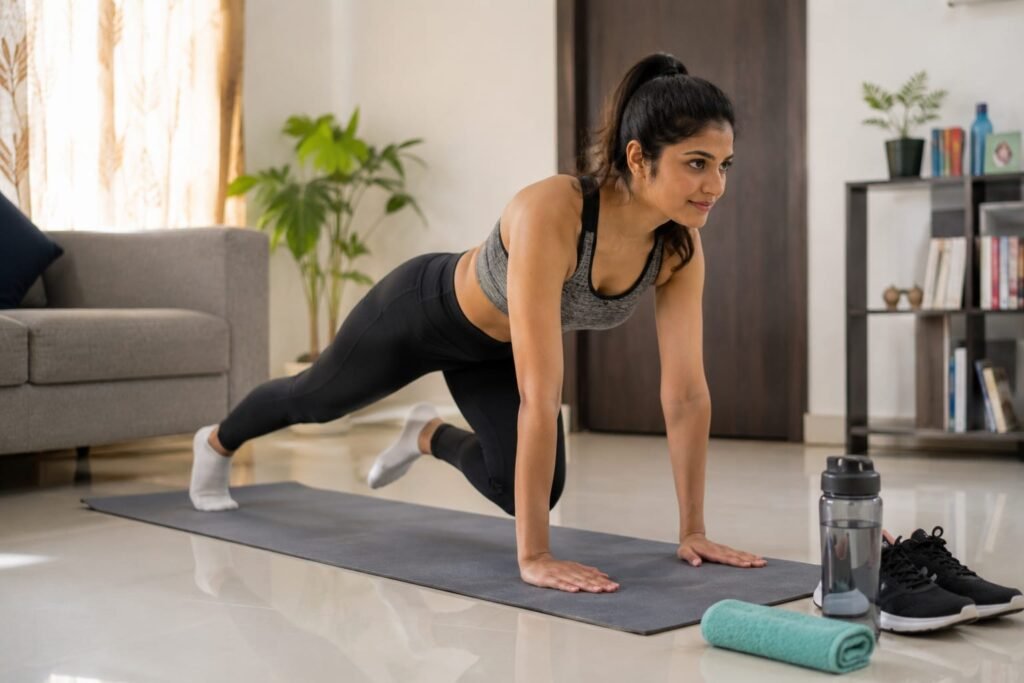
Bodyweight exercises such as squats, lunges, push-ups, planks, and mountain climbers use your own body as resistance. Walking, jogging, stair climbing, cycling, dancing, yoga, and stretching can also become part of an effective no-gym fitness routine.
The biggest advantage is convenience. When you remove the need to travel to a gym, you may find it easier to exercise consistently. You can start with just a few minutes and gradually increase the duration and intensity as your fitness improves.
However, effective exercise is not about doing as much as possible. It is about choosing activities that match your current ability, using good technique, allowing your body to recover, and building a routine that you can maintain.
In this guide, we will explore practical workouts you can do anywhere, how to create a simple no-gym routine, common mistakes to avoid, and ways to stay motivated.
What Does Fitness Without the Gym Mean?
Fitness without the gym means staying physically active without depending on a traditional gym environment.
You can exercise using:
- Your own body weight
- A chair
- Stairs
- A wall
- A towel
- A backpack
- A resistance band
- A yoga mat
- Outdoor spaces
- Everyday activities
You do not need expensive equipment to begin.
A successful fitness routine should include different types of movement. For example, you can combine strength exercises with walking, stretching, balance exercises, and activities that improve cardiovascular fitness.
The goal is not simply to exercise anywhere. The goal is to create a safe and realistic routine that helps you become stronger and healthier over time.
Why Choose a No-Gym Workout?
There are several reasons people choose workouts that do not require a gym.
1. It Saves Time
A gym workout may involve traveling, changing clothes, waiting for equipment, and traveling home. A home or outdoor workout can begin almost immediately.
Even a short workout can help you become more active during the day.
2. It Can Be Affordable
Gym memberships and fitness equipment can be expensive. Bodyweight workouts require little or no equipment.
You can begin with exercises such as:
- Squats
- Lunges
- Push-ups
- Planks
- Glute bridges
- Calf raises
- Jumping jacks
3. You Can Exercise Almost Anywhere
You can adapt your routine to your surroundings.
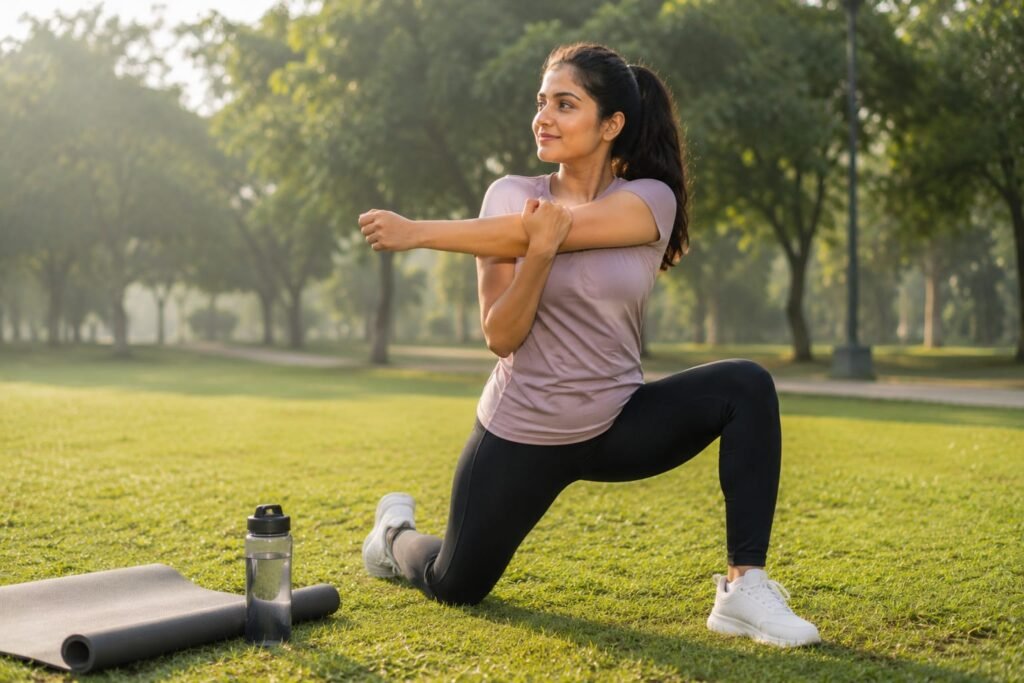
At home, you can use a small open space. In a park, you can walk, jog, or perform bodyweight exercises. While traveling, you can exercise in your hotel room.
4. It Can Be Beginner-Friendly
Many bodyweight exercises can be modified.
For example, a beginner who cannot perform a traditional push-up can start with wall push-ups or incline push-ups.
As strength improves, the exercise can gradually become more challenging.
5. It Encourages Consistency
The best exercise routine is one you can follow regularly.
Removing barriers such as gym fees, travel time, and complicated equipment can make regular exercise easier for some people.
The Basic Types of Exercise You Should Include
A balanced fitness routine should not focus on only one type of exercise.
Strength Training
Strength exercises help you build and maintain muscular strength.
Examples include:
- Squats
- Lunges
- Push-ups
- Glute bridges
- Planks
- Calf raises
- Chair-assisted exercises
Cardiovascular Exercise
Cardio activities increase your heart rate and help improve cardiovascular fitness.
Examples include:
- Brisk walking
- Jogging
- Cycling
- Dancing
- Jumping jacks
- Stair climbing
- Hiking
Flexibility and Mobility
Stretching and mobility exercises can help you move more comfortably.
Examples include:
- Gentle leg stretches
- Shoulder circles
- Hip mobility movements
- Hamstring stretches
- Gentle yoga
Balance
Balance exercises can be useful for improving body control.
Examples include:
- Standing on one leg
- Heel-to-toe walking
- Controlled lunges
- Single-leg movements
A good routine can combine several of these categories instead of relying on only one.
10 Effective Workouts You Can Do Anywhere
Here are simple exercises that can become part of your no-gym workout routine.
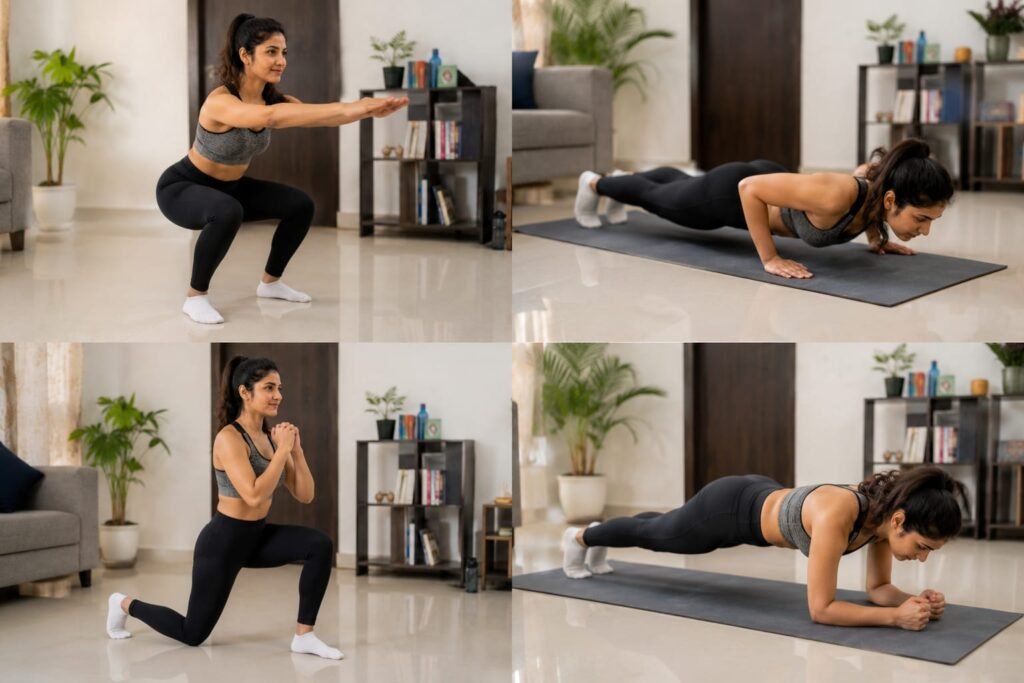
1. Bodyweight Squats
Squats are one of the easiest exercises to include in a home or outdoor workout.
How to do them:
- Stand with your feet approximately shoulder-width apart.
- Keep your chest comfortably upright.
- Bend your knees and push your hips backward.
- Lower yourself as far as comfortable while maintaining control.
- Push through your feet to return to standing.
Beginner Tip
Start with a small number of repetitions and focus on controlled movement instead of speed.
2. Push-Ups
Push-ups work several upper-body muscles and can be performed without equipment.
How to make them easier:
Beginners can start with:
- Wall push-ups
- Incline push-ups using a stable surface
- Knee-supported push-ups
As strength improves, you can work toward traditional push-ups.
Safety Tip
Keep your body controlled and avoid allowing your hips to drop or rise excessively.
3. Lunges
Lunges can help train your legs and improve lower-body strength and balance.
You can perform:
- Forward lunges
- Reverse lunges
- Stationary lunges
For beginners, stationary or reverse lunges may feel easier to control.
If your balance is limited, use a stable support nearby.
4. Glute Bridges
Glute bridges are simple exercises that can be performed on a mat or comfortable floor.
How to do them:
- Lie on your back.
- Bend your knees.
- Keep your feet comfortably on the floor.
- Tighten your abdominal area gently.
- Lift your hips in a controlled way.
- Pause briefly.
- Slowly lower your hips.
Avoid rushing through the movement.
5. Plank
Planks are commonly used to train the muscles around your core.
Beginner approach:
Start by holding a comfortable position for a short period rather than trying to hold a plank for several minutes.
You can also start with a modified plank if needed.
Focus on keeping your body controlled and breathing normally.
6. Calf Raises
Calf raises require very little space.
How to do them:
- Stand upright.
- Keep your feet stable.
- Slowly raise your heels.
- Pause briefly at the top.
- Lower your heels slowly.
If balance is difficult, hold a stable surface for support.
7. Jumping Jacks
Jumping jacks are a simple cardio movement that can raise your heart rate.
However, they may not be suitable for everyone, particularly people who need to avoid high-impact movements.
A low-impact alternative is stepping one foot at a time to each side while moving your arms.
8. Mountain Climbers
Mountain climbers combine core and cardiovascular movement.
Beginners should start slowly and focus on maintaining control.
If the movement feels too difficult, reduce the speed or choose a simpler exercise such as marching in place.
9. Stair Workout
If you have access to safe stairs, they can provide a simple way to add movement to your routine.
You can:
- Walk up and down at a comfortable pace.
- Take controlled steps.
- Use stairs for short intervals.
Always use safe, stable stairs and avoid rushing.
10. Walking
Never underestimate walking.
Brisk walking can be an excellent way to increase daily physical activity. You can walk:
- Around your neighborhood
- In a park
- On a walking trail
- Around your workplace
- While traveling
You can also break your walking into smaller sessions throughout the day.
A Simple 30-Minute No-Gym Workout
If you have about 30 minutes, try this general structure.
Warm-Up – 5 Minutes
Start with gentle movements such as:
- Walking in place
- Arm circles
- Shoulder movements
- Gentle leg movements
- Easy marching
Main Workout – 20 Minutes
Perform a selection of exercises such as:
- Squats
- Incline or regular push-ups
- Reverse lunges
- Glute bridges
- Planks
- Marching or jumping jacks
Choose a comfortable number of repetitions or a short work period.
Take breaks when needed.
Cool-Down – 5 Minutes
Finish with:
- Slow walking
- Gentle breathing
- Comfortable stretching
- Light mobility exercises
The exact routine should be adjusted according to your fitness level.
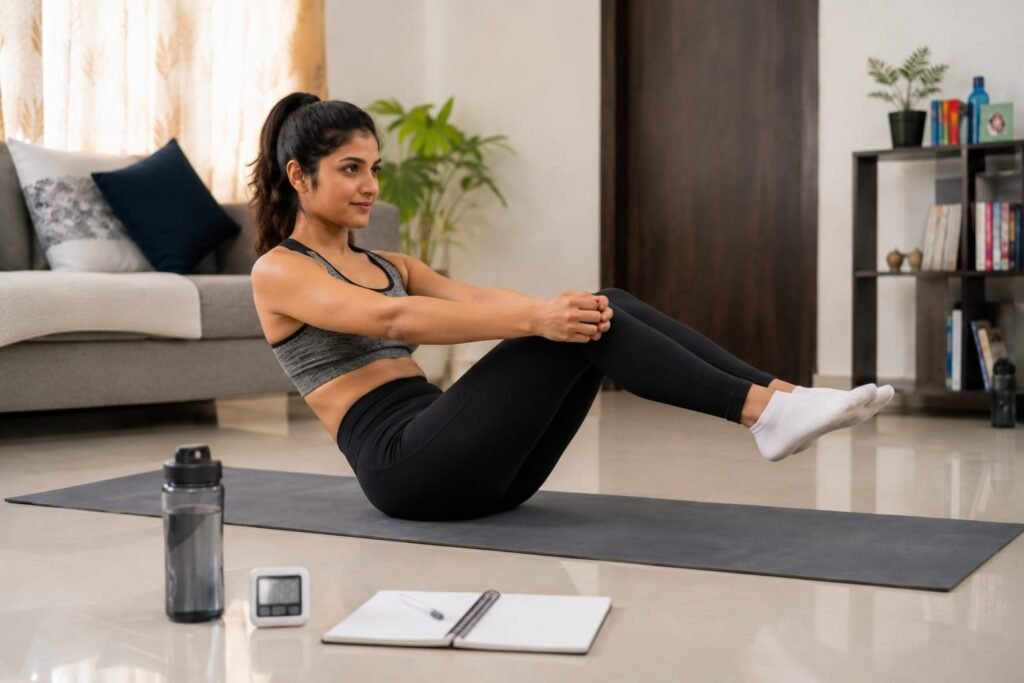
How to Create Your Own No-Gym Workout Plan
You do not need a complicated training schedule.
Start by deciding how many days you can realistically exercise.
For example:
Monday
Strength workout + short walk
Tuesday
Walking + stretching
Wednesday
Strength workout
Thursday
Light activity or rest
Friday
Full-body workout
Saturday
Walking, cycling, dancing, or outdoor activity
Sunday
Rest or gentle movement
This is only an example. Your schedule should fit your lifestyle.
The important point is consistency.
How to Progress Without Gym Equipment
Some people think they cannot become stronger without weights.
That is not true.
You can make bodyweight exercises more challenging in several ways.
Increase Repetitions
If an exercise becomes easy, gradually increase the number of repetitions.
Increase Time
For exercises such as planks or certain cardio movements, you can gradually increase the duration.
Improve Control
Performing an exercise slowly and with good control can make it more challenging.
Try More Difficult Variations
For example:
- Wall push-up → incline push-up → regular push-up
- Assisted squat → bodyweight squat → more challenging squat variations
Progress gradually rather than trying to advance too quickly.
Key Pointers for Fitness Without the Gym
Remember these important points:
- You do not need a gym to become more active.
- Start with exercises appropriate for your current fitness level.
- Focus on proper technique.
- Warm up before harder exercise.
- Cool down after your workout.
- Increase difficulty gradually.
- Include rest and recovery.
- Stay hydrated.
- Combine strength, cardio, mobility, and balance activities.
- Choose activities you enjoy.
- Consistency is more important than perfection.
- Stop if you experience unusual or severe pain.
- Use stable furniture and surfaces when exercising at home.
- Keep enough space around you to exercise safely.
Common Mistakes to Avoid
1. Doing Too Much Too Soon
One of the most common mistakes is starting with an extremely difficult routine.
Your body needs time to adapt.
Start at a manageable level and gradually increase your workload.
2. Ignoring Technique
Doing many repetitions with poor form is not necessarily better.
Learn the movement first. Then increase repetitions or difficulty.
3. Skipping Warm-Ups
A few minutes of gentle movement can help prepare your body for exercise.
Do not immediately begin an intense workout when your body is completely inactive.
4. Exercising Through Serious Pain
Normal effort and muscle fatigue are different from sharp or severe pain.
If something feels seriously wrong, stop the activity and seek appropriate professional advice.
5. Forgetting Recovery
Rest is part of a fitness routine.
Your body needs recovery after physical activity.
6. Comparing Yourself With Others
Fitness progress is individual.
Someone else may be able to perform more repetitions or exercise for longer. That does not mean you need to copy them immediately.
Focus on your own progress.
How to Stay Motivated
Motivation can change from day to day.
Instead of depending only on motivation, build simple habits.
Set Small Goals
Instead of saying, “I will become extremely fit,” create smaller goals such as:
- Walk for 20 minutes.
- Complete two workouts this week.
- Stretch for five minutes.
- Take more active breaks.
Small goals are easier to track.
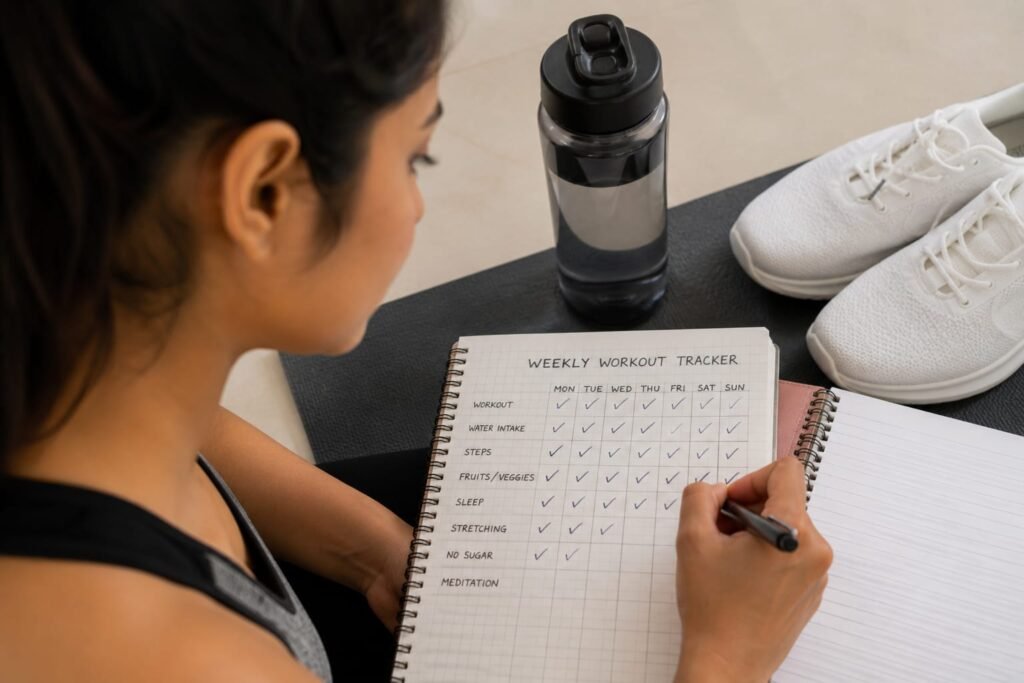
Keep a Fitness Journal
Write down:
- Workout type
- Duration
- Exercises
- Repetitions
- How you felt
This can help you notice progress over time.
Exercise With Friends
You can walk, cycle, stretch, or follow a workout with a friend.
Social support can make exercise more enjoyable.
Make Exercise Convenient
Keep your workout clothes, shoes, and mat ready.
The easier it is to begin, the fewer excuses you may have.
Choose Activities You Enjoy
Fitness does not have to mean repeating the same workout every day.
You can dance one day, walk the next, and perform strength exercises another day.
Enjoyment can help make physical activity more sustainable.
Fitness While Traveling
Travel should not mean completely stopping physical activity.
You can stay active with simple options.
In a Hotel Room
Try:
- Squats
- Wall push-ups
- Lunges
- Glute bridges
- Planks
- Marching in place
Outdoors
Try:
- Walking
- Hiking
- Cycling
- Jogging
- Exploring a city on foot
Travel can actually provide many opportunities to move more naturally.
Instead of worrying about completing a perfect workout, focus on staying active.
Fitness at Work or College
You can also add movement during your daily schedule.
Try:
- Taking short walking breaks.
- Using stairs when practical.
- Stretching during breaks.
- Walking while having a phone conversation when possible.
- Avoiding long periods of sitting without movement.
These small changes can add more activity to your day.
Can You Build Muscle Without a Gym?
Bodyweight exercises can help improve muscular strength, particularly for beginners and people who are returning to exercise.
However, strength and muscle-building goals can vary significantly between individuals.
As you become stronger, you may eventually need more resistance or more advanced exercise variations to continue challenging your muscles.
A gym is one option for progressive resistance training, but it is not the only option.
Resistance bands, backpacks with appropriate loads, and other equipment can also provide resistance when used safely.
Nutrition Also Matters
Exercise is only one part of a healthy lifestyle.
Your body needs adequate nutrition to support daily activities and recovery.
Try to build meals around a variety of foods, such as:
- Vegetables
- Fruits
- Whole grains
- Pulses and beans
- Eggs or other protein sources
- Dairy or suitable alternatives
- Nuts and seeds
Drink enough fluids according to your individual needs and activity level.
Avoid thinking that exercise gives you permission to ignore your overall eating habits.
A balanced approach is usually more sustainable than extreme diets or restrictive eating patterns.
Sleep and Recovery
Recovery is another important part of fitness.
Good-quality sleep supports your body’s normal recovery processes and can affect how you feel during exercise.
Create a regular sleep routine when possible.
Also remember that rest days are not wasted days. Recovery allows you to return to physical activity with better energy and readiness.
When Should You Talk to a Professional?
Most healthy adults can participate in many forms of physical activity, but individual needs differ.
If you have a medical condition, injury, significant physical limitations, or concerns about starting exercise, consider speaking with a qualified healthcare professional before beginning a new workout program.
A qualified fitness professional can also help you learn exercise technique and create a program suited to your abilities and goals.
Building a Long-Term Fitness Habit
The biggest secret to fitness without the gym is not a particular exercise.
It is consistency.
You do not need to complete a perfect workout every day.
Some days you may have 30 minutes. Other days you may only have 10 minutes.
Instead of giving up completely, do what you can.
For example:
Busy day: 10-minute walk
Normal day: 30-minute workout
Free day: Longer walk, cycling, or full workout
This flexible approach can make physical activity easier to maintain.
Summary
Fitness without the gym is possible, practical, and accessible for many people.
You can exercise at home, outdoors, while traveling, or in other suitable spaces using little or no equipment.
Bodyweight exercises such as squats, push-ups, lunges, glute bridges, and planks can form the foundation of a simple strength routine. Walking, cycling, dancing, jogging, and stair climbing can provide cardiovascular activity. Stretching, mobility work, and balance exercises can complete your routine.
The most important principles are to start at an appropriate level, learn proper technique, progress gradually, allow recovery, and remain consistent.
You do not need to chase extreme workouts to make progress. A simple routine that you can follow regularly may be more useful than a complicated plan that you quickly abandon.
Your fitness journey can start with something as simple as a walk, a few squats, or a short stretching session.
Start where you are, use what you have, and build from there.
Quick Takeaway: Fitness Without the Gym
Remember:
Move regularly.
You do not have to spend hours exercising.
Use bodyweight exercises.
Your own body can provide resistance.
Stay consistent.
Small workouts done regularly can become valuable habits.
Progress slowly.
Increase difficulty as your fitness improves.
Recover properly.
Rest, sleep, hydration, and nutrition all matter.
Make fitness enjoyable.
Choose activities you can realistically continue.
Final Thoughts
A gym can be useful, but it is not the only place where fitness happens.
Your home, neighborhood, park, workplace, college campus, or hotel room can all become places where you stay active.
The best workout is often the one you can perform safely and consistently.
Start small. Learn the basics. Listen to your body. Increase the challenge gradually and give yourself enough time to improve.
Fitness does not have to be complicated. It just needs to become part of your everyday life.