
Fitness After a Busy Day: Easy Ways to Stay Active With a Full Schedule
Modern life can be busy. Work, college, family responsibilities, household tasks, travel, social commitments, and personal responsibilities can easily fill the entire day. By the time you finally have some free time, you may feel tired and want to rest.
This is one of the biggest reasons people struggle to exercise regularly.
The good news is that staying fit does not always require spending one or two hours at the gym. Fitness after a busy day can be simple, flexible, and realistic. Even a short walk, a few bodyweight exercises, stretching, or a quick home workout can help you become more active.
The most important thing is not to search for the “perfect” workout. Instead, focus on finding activities that fit naturally into your daily schedule.
Physical activity can support heart health, muscle strength, mobility, energy, mood, and overall well-being. Regular movement can also help reduce the amount of time you spend sitting during the day.
If your schedule is full, the goal should be to create a fitness routine that you can actually maintain.
Quick Summary
If you have very little time, remember these simple points:
- You do not need a gym to stay active.
- Even 10–20 minutes of exercise can be useful.
- Walking is one of the easiest ways to add movement to your day.
- Short workouts can be divided into smaller sessions.
- Bodyweight exercises can be done almost anywhere.
- Stretching can help you relax after a long day.
- Choose exercises according to your fitness level.
- Do not ignore rest and recovery.
- Build a routine that fits your real lifestyle.
- Consistency is more important than doing a perfect workout occasionally.
Why Is Fitness After a Busy Day Important?
A busy schedule often means spending many hours sitting, working on a computer, studying, driving, or using a phone.
Being busy does not automatically mean being physically active.
You may be mentally active throughout the day while your body gets very little movement. This is why adding intentional physical activity can be important.
Exercise can help support:
- Cardiovascular fitness
- Muscle strength
- Flexibility and mobility
- Balance and coordination
- Energy levels
- Stress management
- Sleep quality
- Overall physical well-being
However, exercise should not feel like another impossible task on your to-do list.
The best fitness plan is one that matches your lifestyle.
If you only have 15 minutes available, use those 15 minutes. If you have 30 minutes, use that time. If you are extremely tired, a gentle walk or stretching session may be more appropriate than an intense workout.
1. Start With a Realistic Fitness Goal
One common mistake busy people make is setting unrealistic goals.
For example, someone may decide:
“I will exercise for one hour every morning and go to the gym six days a week.”
That sounds motivating at first, but if your schedule does not support it, you may stop after a few days.
Instead, create a realistic goal.
For example:
“I will move my body for at least 20 minutes on most days.”
This gives you flexibility.
Your fitness goal should consider:
- Your work or college schedule
- Your current fitness level
- Your available time
- Your energy levels
- Your preferred activities
- Your recovery needs
Small goals can become long-term habits.
2. Use the 10-Minute Fitness Rule
When you feel too busy to exercise, tell yourself that you only need to start with 10 minutes.
Ten minutes can include:
- Brisk walking
- Squats
- Wall push-ups
- Lunges
- Marching in place
- Jumping jacks
- Stretching
- Light yoga
- Stair climbing
Starting is often harder than continuing.
Once you begin moving, you may decide to continue for another 5–10 minutes.
Even when you stop after 10 minutes, you have still created movement instead of doing nothing.
The purpose of this approach is not to make every workout short. It is to remove the mental barrier that says you need a large amount of free time before exercise is worthwhile.
3. Take a Walk After Work or College
Walking is one of the simplest forms of physical activity.
You do not need expensive equipment or a gym membership. A comfortable pair of shoes and a safe place to walk may be enough.
Try taking a 15–30 minute walk after finishing your main responsibilities.
You could:
- Walk around your neighborhood
- Walk in a nearby park
- Walk while listening to music
- Walk with a friend or family member
- Walk while catching up on a phone call
If you are very tired, start with a gentle pace.
Walking can also become a transition between your workday and personal time. Instead of immediately moving from your desk to the sofa, a short walk can give you an opportunity to move and mentally switch off from work.

4. Try a Quick Full-Body Home Workout
You do not always need gym equipment.
Bodyweight exercises can provide a practical workout at home.
A simple beginner routine could include:
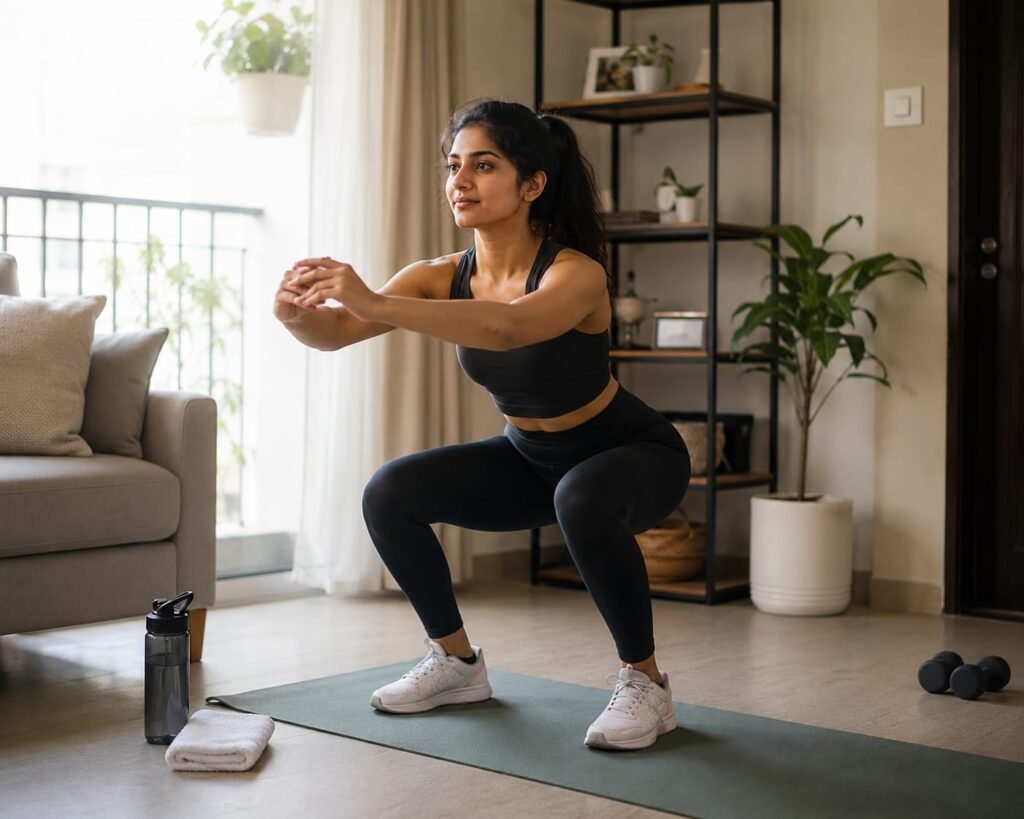
Bodyweight Squats
Stand with your feet about shoulder-width apart. Lower your body comfortably while keeping your chest lifted, then return to standing.
Wall Push-Ups
Place your hands against a wall and perform controlled push-ups. This can be easier than floor push-ups for beginners.
Glute Bridges
Lie on your back with your knees bent. Lift your hips gently and lower them with control.
Marching in Place
Stand upright and march while moving your arms naturally.
Standing Calf Raises
Hold onto a stable surface if necessary and slowly raise and lower your heels.
You can perform each movement for a comfortable number of repetitions and take breaks whenever necessary.
Beginners should focus on controlled movement rather than speed.
5. Create a 20-Minute Workout
If you have about 20 minutes after a busy day, you can divide your session into three parts.
First 5 Minutes – Warm-Up
Try:
- Walking in place
- Arm circles
- Gentle leg movements
- Shoulder rolls
- Light marching
Next 10 Minutes – Main Workout
Choose a few exercises such as:
- Squats
- Wall push-ups
- Glute bridges
- Lunges or supported lunges
- Marching in place
Final 5 Minutes – Cool Down
Finish with:
- Slow walking
- Gentle stretching
- Deep, comfortable breathing
The exact exercises should depend on your fitness level and any physical limitations you may have.
6. Break Exercise Into Small Sessions
You do not always have to complete your activity in one session.
If you cannot find 30 continuous minutes, divide your movement throughout the day.
For example:
Morning: 5-minute mobility routine
Lunch break: 10-minute walk
Evening: 15-minute workout
This can be much easier for someone with a demanding schedule.
Small activity breaks can also help reduce long periods of sitting.
Look for opportunities to move rather than waiting for a large block of free time.
7. Use Stairs When Practical
If you normally use an elevator for one or two floors, consider taking the stairs when it is comfortable and safe.
Stair climbing can add more movement to your day without requiring a separate workout session.
You can also look for other simple opportunities:
- Walk while taking short breaks.
- Stand up regularly during desk work.
- Walk around while talking on the phone.
- Park slightly farther away when practical.
- Take short movement breaks while studying.
These small choices can add up over time.
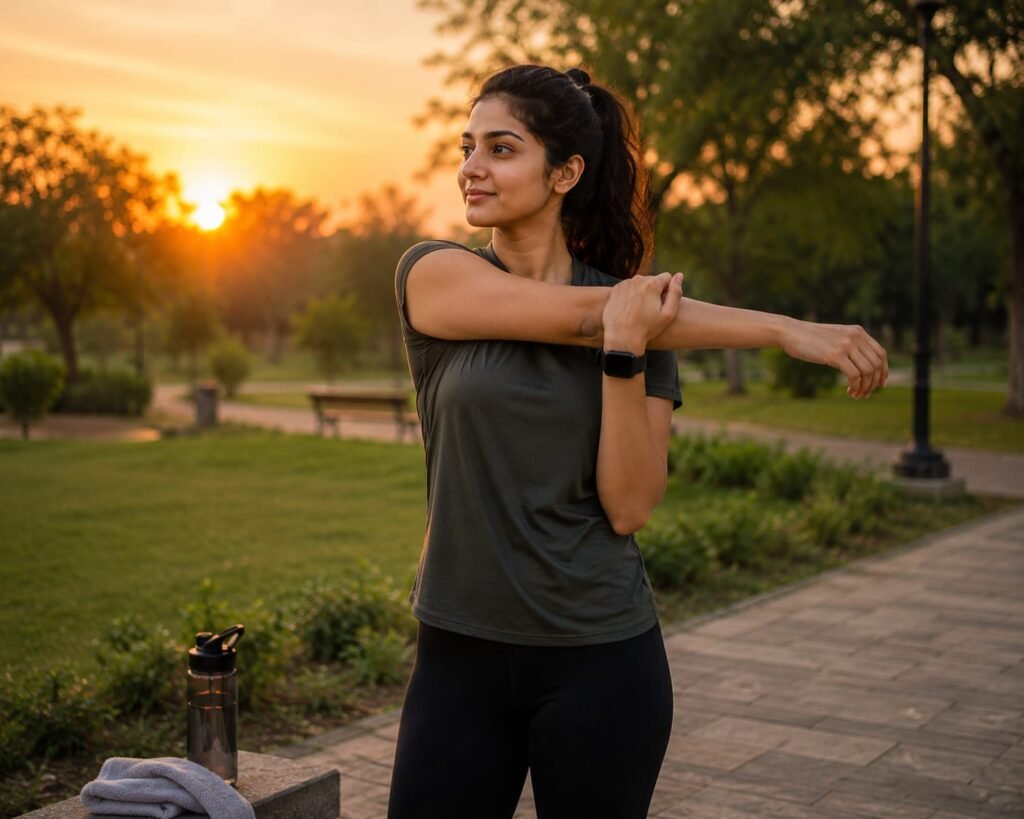
8. Stretch After a Long Day
Sometimes your body does not need an intense workout.
After sitting or standing for many hours, gentle stretching may feel more appropriate.
You can try simple movements for:
- Shoulders
- Neck
- Upper back
- Hips
- Legs
- Calves
Move slowly and avoid forcing a stretch.
Stretching should feel controlled and comfortable. Sharp pain is a reason to stop.
A short evening mobility routine can also become a relaxing part of your bedtime routine.
9. Try Yoga or Gentle Mobility Exercises
Yoga can be another option for people who want a combination of movement, flexibility, balance, and relaxation.
A short beginner session can include simple movements such as:
- Cat-cow
- Child’s pose
- Gentle seated stretches
- Standing side stretches
- Comfortable forward movements
- Simple balance exercises
You do not need to perform advanced poses.
If you are new to yoga, start with beginner-friendly movements and learn proper technique.
People with injuries, pain, pregnancy, medical conditions, or other special considerations should speak with an appropriate healthcare professional before beginning a new exercise program.
10. Make Exercise Part of Your Routine
One of the best ways to stay active with a busy schedule is to connect exercise with something you already do.
For example:
After work → 20-minute walk
After waking up → 5-minute mobility routine
After dinner → 10-minute walk
After studying for one hour → 5-minute movement break
When an activity becomes connected to an existing routine, remembering it can become easier.
You do not have to depend completely on motivation.
Instead, create a system.
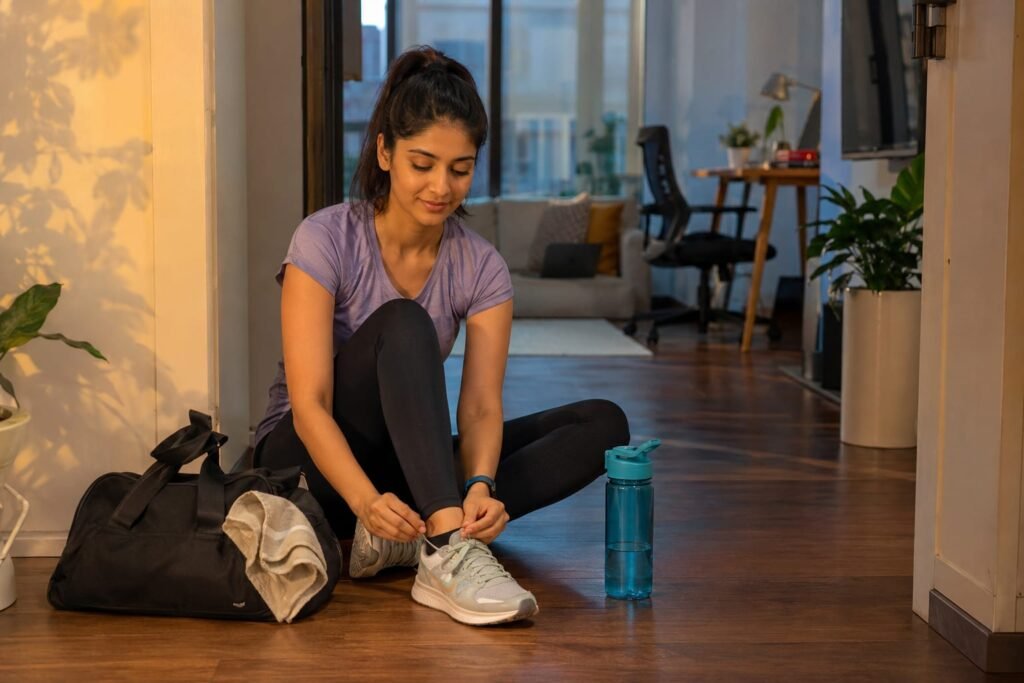
11. Keep Your Workout Clothes Ready
Small preparation can reduce excuses.
If you plan to exercise after work, keep your workout clothes ready before you start your day.
You could prepare:
- Comfortable clothes
- Sports shoes
- Water bottle
- Yoga mat
- Towel
When everything is ready, you can start more quickly.
This is especially useful when you come home tired.
If your workout requires too much preparation, you may be more likely to postpone it.
12. Choose Activities You Actually Enjoy
Fitness does not have to mean lifting weights in a gym.
You can stay active through many different activities.
For example:
- Walking
- Dancing
- Cycling
- Swimming
- Yoga
- Pilates
- Sports
- Hiking
- Home workouts
- Recreational activities
Enjoyment matters because you are more likely to continue an activity you like.
If you dislike running, you do not have to run.
If you enjoy dancing, make dancing part of your fitness routine.
The goal is to find sustainable movement.
13. Use Music to Make Workouts More Enjoyable
Music can make a short workout feel more enjoyable.
Create a playlist that makes you want to move.
You can use different playlists for:
- Walking
- Strength workouts
- Home cardio
- Stretching
- Yoga
However, if you are exercising outdoors, remain aware of your surroundings and avoid unsafe headphone use in traffic areas.
14. Do Not Forget Strength Training
Busy people sometimes focus only on walking or cardio.
Strength training is also an important part of a balanced fitness routine.
You can perform basic strength exercises without expensive equipment.
Examples include:
- Squats
- Wall push-ups
- Glute bridges
- Step-ups
- Supported lunges
- Resistance-band exercises
Strength exercises should be performed with proper technique.
If you are completely new to strength training, start with simple movements and gradually increase difficulty.
You do not need to train extremely hard every day.
15. Make Your Weekend More Active
If weekdays are extremely busy, use weekends to include additional physical activity.
You could:
- Go for a longer walk
- Cycle
- Play a sport
- Go hiking
- Try a fitness class
- Do a longer home workout
- Spend time outdoors
However, weekends should not become an excuse to completely ignore movement during the week.
Think of weekend activity as an addition, not a replacement for regular daily movement.
16. Prioritize Sleep and Recovery
A healthy fitness routine is not only about exercise.
Recovery matters too.
If you regularly sleep poorly and push yourself through exhausting workouts, you may struggle to maintain your routine.
Try to create healthy sleep habits such as:
- Keeping a regular sleep schedule
- Creating a relaxing bedtime routine
- Reducing unnecessary screen time before bed
- Keeping your sleeping environment comfortable
- Allowing enough time for sleep
Your body needs recovery after physical activity.
If you feel unusually exhausted, sick, dizzy, or experience significant pain, stop exercising and consider seeking appropriate medical advice.
17. Eat in a Way That Supports Your Routine
Exercise is only one part of a healthy lifestyle.
Your meals should provide the energy and nutrients your body needs.
Try to include a variety of foods such as:
- Vegetables
- Fruits
- Whole grains
- Pulses and beans
- Protein-rich foods
- Dairy or suitable alternatives
- Nuts and seeds
- Healthy sources of fats
- Enough fluids
You do not need a complicated diet.
Focus on balanced meals and sensible portions.
If you have specific nutritional needs or medical conditions, consider getting personalized advice from a qualified healthcare professional or registered dietitian.
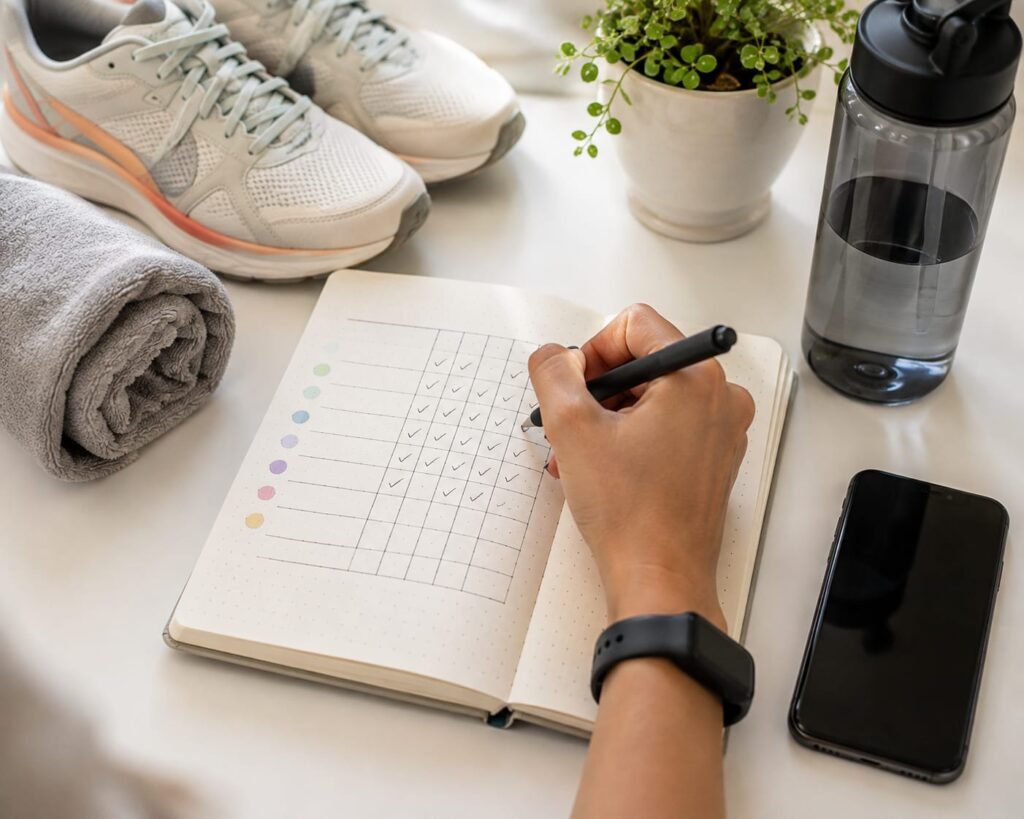
18. Track Your Progress Without Becoming Obsessed
Tracking can help you understand your habits.
You could record:
- Workout days
- Walking time
- Number of active breaks
- Strength exercises completed
- How you feel after exercise
- Sleep habits
You do not have to track every detail.
A simple calendar with check marks can be enough.
Instead of asking:
“Did I have a perfect week?”
Ask:
“Did I move more consistently than before?”
Progress is not always about weight or appearance.
You may notice improvements in:
- Energy
- Strength
- Stamina
- Mobility
- Confidence
- Workout consistency
19. Common Fitness Mistakes Busy People Should Avoid
Mistake 1: Waiting for the Perfect Time
There may never be a perfect time.
Use the time you have.
Mistake 2: Trying to Exercise for Too Long
Long workouts are not always necessary.
Start with a manageable duration.
Mistake 3: Exercising Too Hard Every Day
Your body needs recovery.
Balance challenging workouts with easier movement and rest.
Mistake 4: Comparing Yourself With Others
Someone else’s fitness level does not define yours.
Focus on your own progress.
Mistake 5: Ignoring Pain
Normal exercise effort is different from sharp or severe pain.
Stop an exercise that causes concerning pain and seek professional guidance when appropriate.
Mistake 6: Focusing Only on Weight Loss
Fitness has many benefits beyond body weight.
Consider strength, stamina, mobility, energy, and overall well-being.
20. A Simple Fitness Plan for a Busy Week
Here is an example of how you can organize movement without spending hours exercising.
| Day | Simple Activity |
|---|---|
| Monday | 20-minute home workout |
| Tuesday | 20–30-minute walk |
| Wednesday | 15-minute strength workout |
| Thursday | Gentle stretching or yoga |
| Friday | 20-minute full-body workout |
| Saturday | Longer outdoor walk or recreational activity |
| Sunday | Light movement and recovery |
This is only an example.
Your actual routine should depend on your schedule, fitness level, preferences, and health needs.
The key idea is flexibility.
If you miss Monday’s workout, do not assume the entire week is ruined. Simply continue with your next opportunity.
Pointers for Staying Active With a Full Schedule
Keep these practical tips in mind:
- Start small. A short workout is better than constantly waiting for a free hour.
- Schedule movement. Treat exercise like an important appointment.
- Walk whenever practical. Walking is easy to fit into many schedules.
- Keep equipment simple. Bodyweight exercises can be enough for beginners.
- Prepare in advance. Keep shoes and workout clothes ready.
- Use short breaks. A few minutes of movement can break up long periods of sitting.
- Choose enjoyable activities. You are more likely to continue them.
- Listen to your body. Harder is not always better.
- Allow recovery. Rest is part of fitness.
- Focus on consistency. Small actions repeated regularly can become powerful habits.
How to Stay Motivated After a Long Day
Motivation can disappear after a stressful day.
Instead of depending only on motivation, make exercise easier to start.
Try the following:
Set a Minimum Goal
Tell yourself:
“I will exercise for 10 minutes.”
This feels easier than committing to a long workout.
Prepare Beforehand
Keep your clothes and shoes ready.
Create a Regular Time
Exercise at approximately the same time when possible.
Find an Accountability Partner
A friend or family member can make walking or exercising more enjoyable.
Celebrate Consistency
Give yourself credit for showing up.
A 15-minute workout completed regularly can be more useful for your routine than a two-hour workout that happens once every few weeks.
When You Should Choose Rest Instead
Being active is important, but rest is also important.
If you are extremely tired, sick, injured, dizzy, or experiencing unusual symptoms, pushing through a workout may not be the right choice.
Take time to recover and seek appropriate professional advice when needed.
Remember that a healthy lifestyle includes:
Exercise + Nutrition + Sleep + Recovery + Stress Management
Fitness is not about punishing your body.
It is about supporting your health and building habits that can continue over time.
Conclusion
Staying fit with a busy schedule is possible.
You do not need to spend hours in a gym or completely change your lifestyle. Instead, look for small opportunities to move throughout your day.
A 10-minute home workout, a short evening walk, a few stretching exercises, or taking the stairs can all become part of an active lifestyle.
The most important thing is consistency.
Do not wait until your schedule becomes completely free. Start with the time you have today.
If you have only 10 minutes, use 10 minutes. If you have 30 minutes, use 30 minutes. If you need a recovery day, allow your body to rest.
Your fitness routine should support your life rather than make your life more stressful.
With realistic goals, simple exercises, regular movement, good nutrition, enough sleep, and proper recovery, you can build a healthier lifestyle even when your schedule is full.
Start small, stay consistent, and make movement a normal part of your day.
Final Takeaway
Fitness after a busy day does not need to be complicated.
The best routine is one that you can realistically follow.
Remember:
Move when you can. Start small. Choose activities you enjoy. Recover properly. Stay consistent.
Those simple habits can help turn physical activity from another item on your to-do list into a natural part of your everyday life.