
Health and Fitness Goals: How to Set Realistic Goals and Stay Consistent
Introduction
Setting health and fitness goals can be exciting. You may want to lose weight, become stronger, improve your stamina, eat healthier, sleep better, or simply feel more energetic during the day. However, many people start with big goals and expect quick results. When progress takes longer than expected, motivation can decrease and the routine may be abandoned.
The key to long-term success is not trying to change everything at once. Instead, it is about setting realistic health and fitness goals and building simple habits that you can continue over time.
A realistic goal gives you a clear direction without putting unnecessary pressure on you. Consistency then helps turn that goal into a healthy lifestyle.
Whether you are a beginner or someone returning to exercise after a break, this guide will explain how to create achievable goals, stay motivated, handle setbacks, and build habits that support your overall health.
Quick Summary
Here are the main points to remember:
- Set goals that are realistic and meaningful to you.
- Focus on healthy habits instead of quick results.
- Use SMART goals to make your goals clearer.
- Start small and increase gradually.
- Track your progress regularly.
- Choose activities that you enjoy.
- Create a routine that fits your lifestyle.
- Do not expect perfection every day.
- Learn from setbacks instead of giving up.
- Give your body enough rest and recovery.
- Focus on progress rather than comparing yourself with others.
- Ask a qualified healthcare or fitness professional for guidance when needed.
Why Are Health and Fitness Goals Important?
Goals can give your fitness journey a clear direction. Without a goal, you may exercise or change your diet for a few days without knowing what you are working toward.
A good goal can help you:
- Stay focused
- Measure progress
- Build healthy habits
- Improve motivation
- Create a routine
- Make better daily choices
- Recognize your achievements
For example, saying “I want to get fit” is a general idea. A clearer goal could be “I will walk for 30 minutes, five days a week.”
The second goal gives you something specific to work on.
However, goals should not become a source of stress. Your health journey should support your well-being rather than make you feel guilty whenever you miss a workout or eat something less nutritious.
Start With Your Real Reason
Before choosing a fitness goal, ask yourself why you want to make a change.
Your reason could be:
- I want more energy.
- I want to become stronger.
- I want to improve my stamina.
- I want to support my heart health.
- I want to feel more confident.
- I want to improve my daily routine.
- I want to become more active.
- I want to improve my sleep habits.
Understanding your reason can help you stay committed when motivation becomes low.
Try to focus on reasons that are meaningful to you rather than choosing a goal only because someone else is doing it.
Set SMART Health and Fitness Goals
One useful method for goal setting is the SMART approach.
SMART stands for:
- Specific
- Measurable
- Achievable
- Relevant
- Time-bound
Specific
Your goal should clearly explain what you want to do.
Instead of:
“I want to exercise more.”
Try:
“I will walk for 30 minutes after work.”
Measurable
You should have a way to track your progress.
For example:
“I will complete three strength-training sessions each week.”
You can easily record whether you completed those sessions.
Achievable
Your goal should match your current fitness level, schedule, and abilities.
If you have not exercised for a long time, starting with intense daily workouts may be difficult. A smaller goal may be more realistic.
Relevant
Your goal should matter to your health and lifestyle.
If your main goal is better stamina, walking, cycling, swimming, or another suitable cardiovascular activity may be more relevant than focusing only on appearance.
Time-Bound
Give yourself a reasonable period for working toward your goal.
For example:
“For the next four weeks, I will walk for 30 minutes on five days each week.”
This gives your goal a clear time frame.
Start Small Instead of Trying to Change Everything
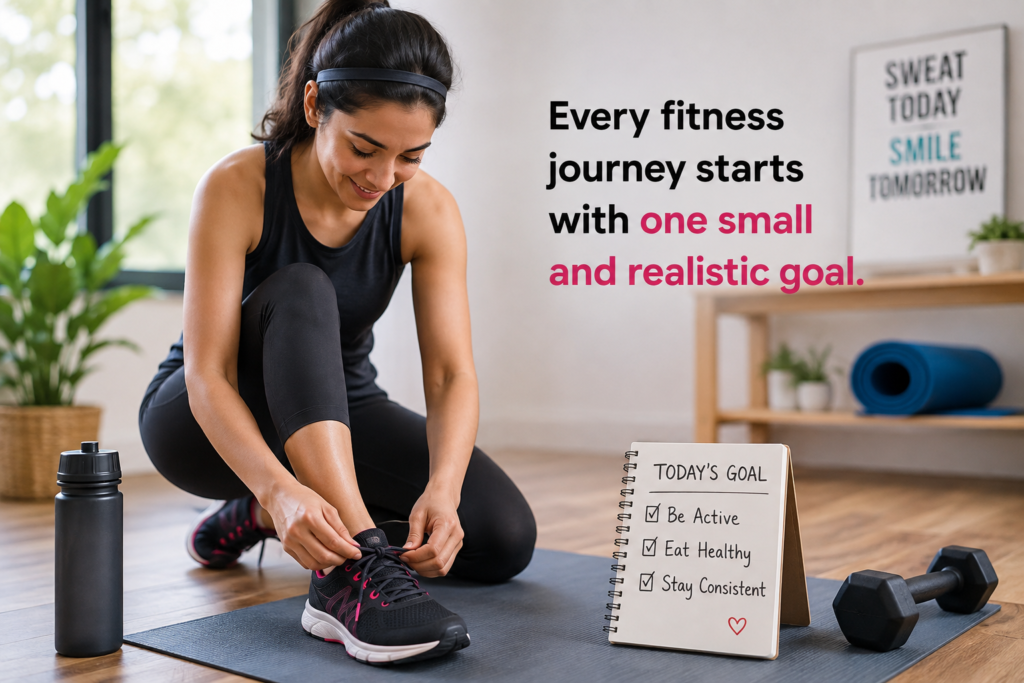
One of the most common mistakes people make is changing too many things at the same time.
Someone may suddenly decide to:
- Exercise every day
- Completely change their diet
- Stop eating their favorite foods
- Wake up very early
- Drink large amounts of water
- Sleep much earlier
- Track every calorie
This may work for a short period, but it can become difficult to maintain.
Instead, choose one or two habits first.
For example:
Week 1: Walk for 20 minutes three times.
Week 2: Continue walking and add two short strength sessions.
Week 3: Add more vegetables to one meal each day.
Small steps may seem simple, but they can become powerful when repeated consistently.
Focus on Habits, Not Just Results
Many people set outcome-based goals such as losing a certain amount of weight or reaching a particular body shape.
Results can be motivating, but they are not always completely under your control.
Your body can respond differently depending on factors such as:
- Age
- Genetics
- Sleep
- Stress
- Activity level
- Nutrition
- Medical conditions
- Medication
- Daily routine
Instead of focusing only on the final result, focus on actions that you can control.
For example:
Outcome goal: Become fitter.
Habit goal: Walk or exercise for 30 minutes five days per week.
The habit is something you can work on every day.
Create a Fitness Routine That Fits Your Life
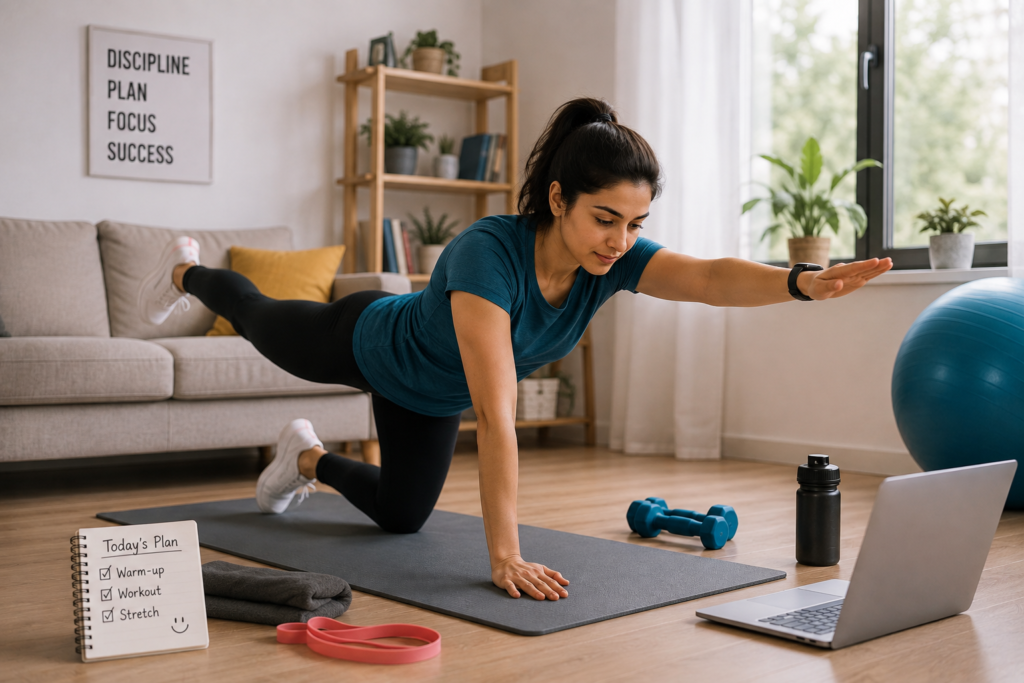
A fitness plan should work with your lifestyle rather than against it.
If you have a busy schedule, you may not be able to spend two hours at the gym.
That does not mean you cannot be active.
You can try:
- Short home workouts
- Walking during breaks
- Taking stairs when practical
- Stretching in the morning
- Cycling
- Dancing
- Yoga
- Bodyweight exercises
- Outdoor activities
The best exercise routine is one that you can realistically continue.
Choose Activities You Enjoy
Exercise does not have to feel like punishment.
If you dislike running, you do not have to make running your main activity.
You could try:
- Walking
- Swimming
- Cycling
- Dancing
- Yoga
- Strength training
- Hiking
- Sports
- Group fitness classes
Enjoyment can make it easier to stay consistent.
You can also change your activities occasionally to prevent boredom.
Build Consistency With a Simple Schedule
Consistency becomes easier when exercise becomes part of your normal routine.
Choose specific days and times.
For example:
Monday: 30-minute walk
Tuesday: Strength workout
Wednesday: Rest or light movement
Thursday: 30-minute walk
Friday: Strength workout
Saturday: Outdoor activity
Sunday: Rest
Your schedule does not have to look exactly like this. The important thing is to create a routine that matches your lifestyle.
Track Your Progress
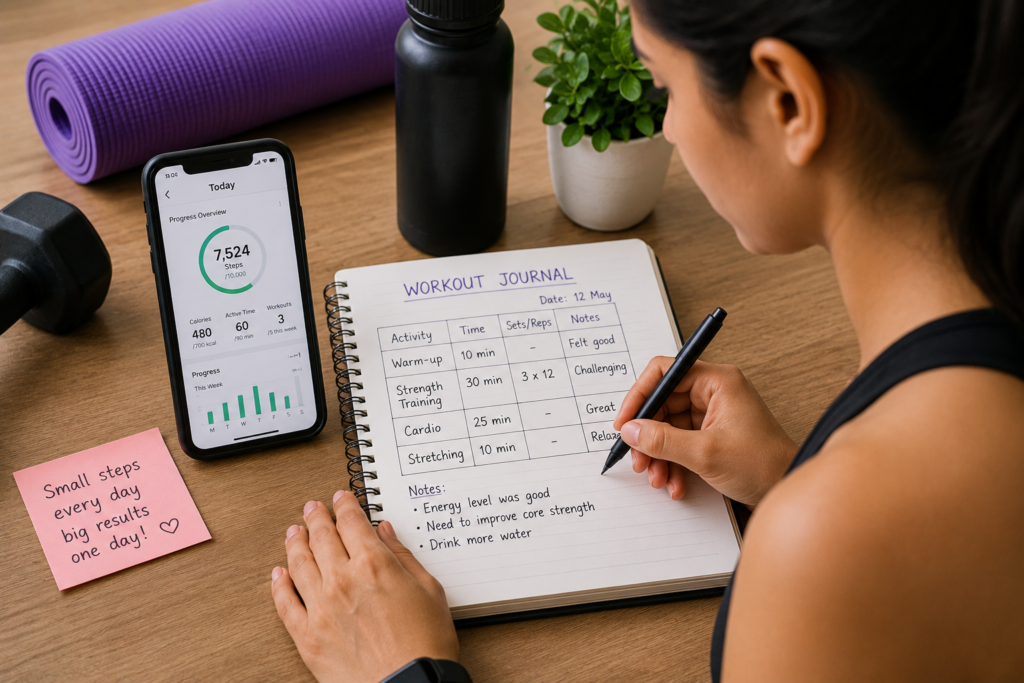
Tracking can help you understand whether your habits are improving.
You can record:
- Workouts completed
- Walking time
- Steps
- Strength improvements
- Sleep habits
- Energy levels
- Water intake
- Fruit and vegetable intake
- How you feel during exercise
A simple notebook can be enough.
You do not need to track everything.
Choose a few measurements that are useful for your goal.
Do Not Depend Only on the Weighing Scale
Body weight is only one measure of health and fitness.
Other signs of progress may include:
- Better stamina
- Improved strength
- Better sleep
- More energy
- Improved mobility
- Better workout performance
- Increased confidence
- More consistent eating habits
For some people, changes in body composition may also occur even when scale weight changes slowly.
Your progress should be viewed as a bigger picture rather than one number.
Learn How to Stay Motivated
Motivation naturally changes.
Some days you may feel excited to exercise. Other days, you may feel tired or busy.
This is normal.
Instead of depending entirely on motivation, create systems that make healthy habits easier.
Try these strategies:
Prepare in Advance
Keep your workout clothes ready.
Schedule Exercise
Treat your workout like an important appointment.
Use Small Goals
A 15-minute workout may feel easier to start than a one-hour workout.
Celebrate Progress
Recognize your effort rather than waiting for a major result.
Find Support
A friend, family member, trainer, or fitness professional may help you stay accountable.
What to Do When You Miss a Workout
Missing one workout does not mean you have failed.
Life can become unpredictable. You may have work, studies, travel, family responsibilities, or simply need extra rest.
The mistake is thinking:
“I missed one workout, so I have ruined my entire plan.”
Instead, return to your routine at the next reasonable opportunity.
One missed day is not the problem. Giving up completely is what can prevent progress.
A useful mindset is:
Never let one missed day become many missed weeks.
Avoid the “All or Nothing” Mindset
Some people believe they must follow their health plan perfectly.
For example:
“If I cannot complete a full workout, there is no point exercising.”
This is not necessary.
A shorter workout can still be useful.
Similarly, eating one less healthy meal does not mean your entire diet is ruined.
Healthy living is about your overall pattern of behavior.
You do not need to be perfect. You need to be consistent most of the time.
Make Healthy Eating Part of Your Goal
Fitness is not only about exercise.
Nutrition plays an important role in overall health and supports physical activity.
A balanced eating pattern can include:
- Vegetables
- Fruits
- Whole grains
- Beans and lentils
- Nuts and seeds
- Protein-rich foods
- Dairy or suitable alternatives
- Healthy sources of fats
Try to focus on balance rather than extreme diets.
Avoid making sudden, restrictive changes unless you are following advice from an appropriately qualified healthcare professional.
Give Your Body Time to Recover
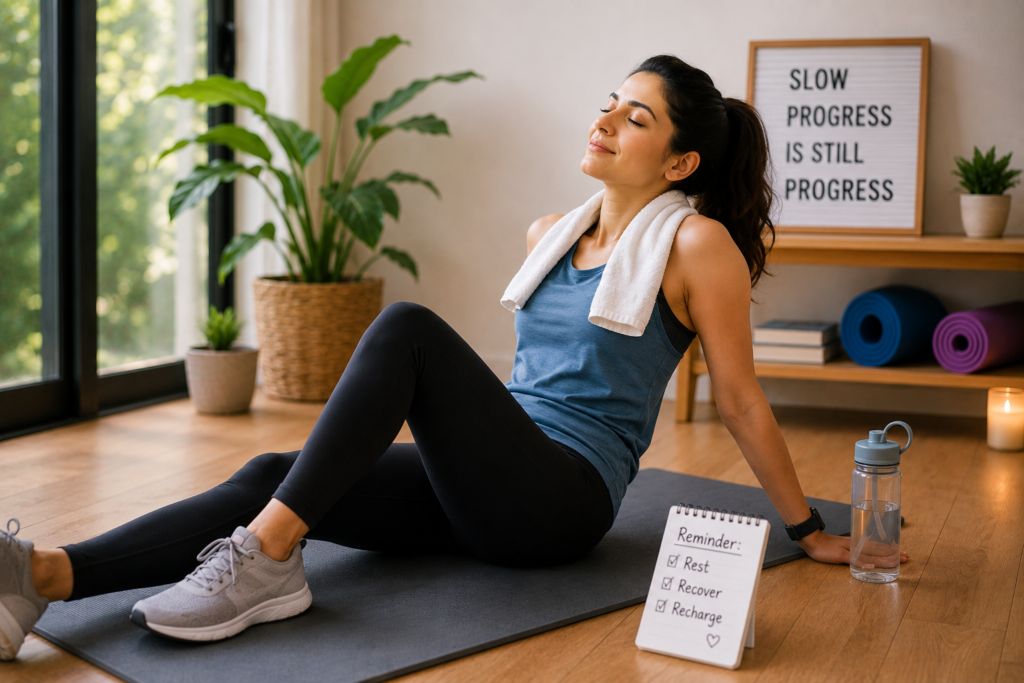
Rest is an important part of fitness.
Your body needs time to recover after physical activity.
Recovery can include:
- Adequate sleep
- Rest days
- Light movement
- Balanced nutrition
- Managing stress
- Gradually increasing exercise
Doing more exercise is not always better.
If you regularly experience unusual pain, dizziness, extreme fatigue, or other concerning symptoms during or after exercise, stop and seek appropriate medical advice.
Avoid Comparing Your Progress With Others
Social media can make fitness look very different from real life.
You may see people showing dramatic transformations, intense workouts, or highly structured diets.
Remember that everyone’s starting point is different.
Factors such as genetics, lifestyle, age, training history, and access to resources can affect progress.
Instead of asking:
“Why am I not progressing like them?”
Ask:
“Am I making progress compared with where I started?”
Your own progress is the most useful comparison.
Common Health and Fitness Goal-Setting Mistakes
1. Setting Unrealistic Goals
Very aggressive goals can create unnecessary pressure.
2. Expecting Immediate Results
Fitness improvements often take time.
3. Doing Too Much Too Soon
Suddenly increasing exercise can increase the risk of injury and excessive fatigue.
4. Following Someone Else’s Routine
A workout that works for one person may not be appropriate for another.
5. Ignoring Recovery
Rest is part of a healthy training plan.
6. Giving Up After a Setback
A setback is an opportunity to adjust your approach.
7. Focusing Only on Appearance
Health includes physical fitness, sleep, nutrition, mental well-being, and daily functioning.
How to Make Your Goals More Realistic
Before committing to a goal, ask yourself:
Is this realistic with my current schedule?
Can I continue this for several months?
Does this support my health?
Can I measure my progress?
What will I do if I miss a day?
Do I actually enjoy this activity?
If your goal feels too difficult, make it smaller.
A goal that feels manageable is more likely to become a habit.
Create a “Minimum Goal”
One useful strategy is to have a minimum version of your habit.
For example:
Your normal goal may be a 30-minute walk.
Your minimum goal could be a 10-minute walk.
On a busy day, completing the minimum goal helps you maintain the habit without putting too much pressure on yourself.
The purpose is not to do less forever. It is to prevent an occasional difficult day from breaking your routine.
When Should You Get Professional Guidance?
Some people may benefit from working with qualified professionals when starting or changing a health and fitness program.
Consider professional guidance if:
- You are new to exercise and unsure where to start.
- You have a medical condition.
- You are recovering from an injury.
- Exercise causes unusual or concerning symptoms.
- You are unsure how to perform exercises safely.
- You have specific nutrition concerns.
- You want a personalized fitness program.
A healthcare professional can help address medical concerns, while a suitably qualified fitness professional can help with exercise technique and program planning within their scope of practice.
Key Pointers
Remember these simple rules when setting health and fitness goals:
- Start small.
- Choose goals that matter to you.
- Make your goals specific.
- Track useful progress.
- Build habits instead of chasing quick results.
- Choose activities you enjoy.
- Create a routine that fits your lifestyle.
- Allow time for recovery.
- Do not compare yourself with others.
- Treat setbacks as part of the process.
- Focus on consistency rather than perfection.
- Seek professional advice when appropriate.

Conclusion
Setting realistic health and fitness goals does not mean lowering your expectations. It means creating goals that match your current lifestyle and can be maintained over time.
Instead of trying to transform your entire life overnight, start with small changes. Walk regularly, choose nutritious foods, get enough rest, stay active, and gradually build your routine.
Remember that progress is not always fast or perfectly predictable. Some weeks may feel easier than others. What matters is returning to your healthy habits and continuing to move forward.
A successful fitness journey is not about being perfect every day. It is about creating a lifestyle that supports your health for the long term.
Start small, stay consistent, track your progress, and give yourself time to improve.
Medical note: This article provides general health and fitness information and is not a substitute for personalized medical advice. If you have a health condition, injury, or concerns about starting exercise, speak with an appropriate healthcare professional before making significant changes.