
Morning Fitness Routine: Simple Exercises to Start Your Day Right
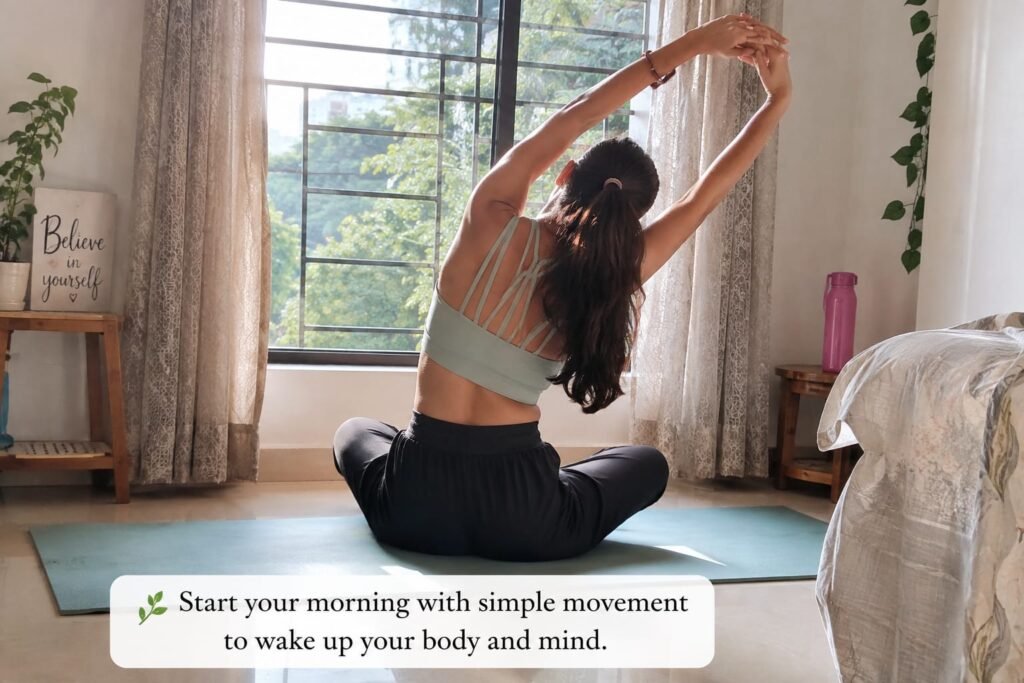
A simple morning fitness routine can help you begin your day with more energy, better focus, and a positive mindset. You do not need a gym, expensive equipment, or a long workout. Even 15–30 minutes of gentle movement can be a useful way to get your body moving after a night of rest.
If you are new to exercise, start slowly and choose movements that feel comfortable. Consistency matters more than doing a difficult workout once in a while.
Quick Summary
A good morning routine can include:
- Light stretching to loosen the body
- Walking or marching to warm up
- Bodyweight exercises such as squats and wall push-ups
- Simple core exercises
- Breathing or relaxation exercises
- A short cool-down
- Water and a balanced breakfast afterward
Why Start Your Day With Exercise?
Morning exercise is not about having the hardest workout possible. It is about creating a healthy habit that fits into your daily schedule.
Moving in the morning can help you feel more awake and ready for the day. Physical activity also supports cardiovascular fitness, muscle strength, balance, and overall health.
For many people, exercising early also makes it easier to stay consistent because fewer daily responsibilities have appeared yet.
However, there is no rule that says morning is the only good time to exercise. The best time is the time that fits your lifestyle and allows you to exercise regularly.
How Long Should a Morning Workout Be?
You do not need to spend an hour exercising.
If you have a busy schedule, try:
5–10 minutes: Stretching and light movement
15 minutes: Basic full-body routine
20–30 minutes: Warm-up, strength exercises, light cardio, and cool-down
Beginners can start with just 5–10 minutes and gradually increase their activity.
The important thing is to avoid thinking that a short workout is useless. A short session is better than regularly skipping exercise because you believe you do not have enough time.
Step 1: Drink Some Water
After waking up, drink some water according to your thirst and normal hydration needs.
You do not need a special detox drink or complicated morning beverage to make your workout effective. Plain water is generally enough for a short, easy workout.
If you plan to exercise for a longer period or exercise intensely, your hydration and nutrition needs may be different.
Step 2: Warm Up Your Body
Never feel that you have to jump directly into difficult exercises after getting out of bed.
A few minutes of easy movement can prepare you for your workout.
Try:
- Walking around your room
- Marching in place
- Shoulder rolls
- Gentle arm circles
- Ankle movements
- Easy side steps
- Gentle hip movements
Spend around 3–5 minutes warming up.
Your warm-up should feel comfortable rather than exhausting.
Step 3: Try Simple Morning Exercises
Now you can move into your main workout.
Here is a beginner-friendly routine that requires little or no equipment.
1. March in Place
Marching in place is one of the easiest ways to get your body moving.
How to do it:
- Stand tall.
- Keep your shoulders relaxed.
- Lift one knee gently.
- Lower it and lift the other knee.
- Continue alternating.
- Move your arms naturally.
Try it for 1–2 minutes.
If you are comfortable, gradually increase your pace.
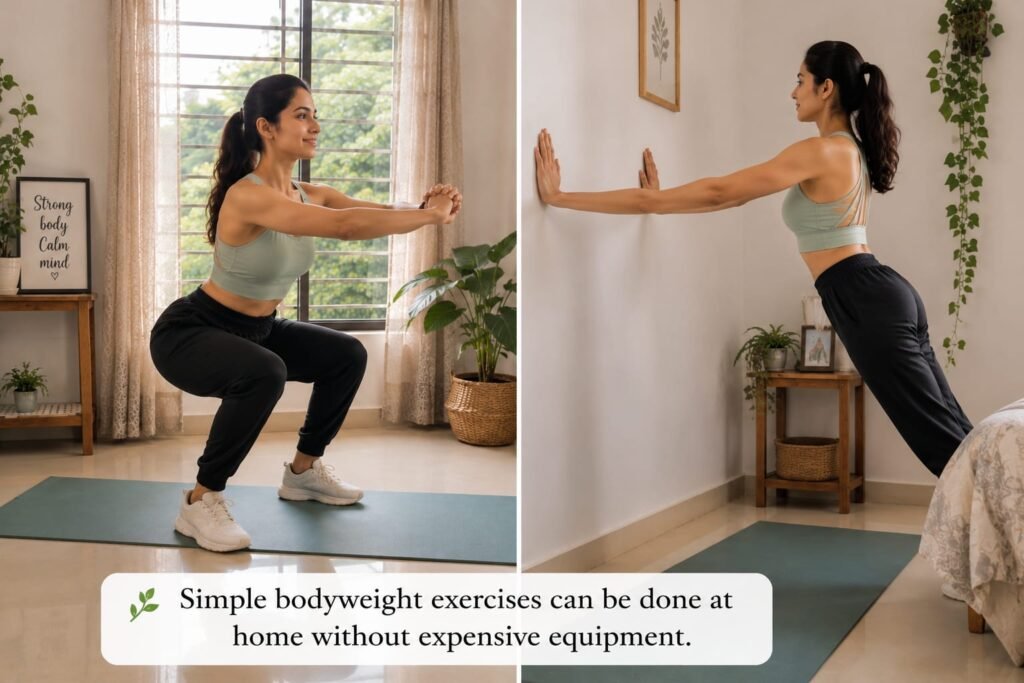
2. Bodyweight Squats
Squats work several muscles in your lower body and are easy to perform without equipment.
How to do them:
- Stand with your feet about shoulder-width apart.
- Keep your chest comfortable and upright.
- Bend your knees and push your hips backward.
- Lower yourself only as far as comfortable.
- Push through your feet to return to standing.
Start with 8–12 repetitions.
If regular squats feel difficult, practice sitting down and standing up from a sturdy chair.
3. Wall Push-Ups
Traditional push-ups can be challenging for beginners. Wall push-ups provide a simpler alternative.
How to do them:
- Stand facing a wall.
- Place your hands against the wall.
- Keep your body relatively straight.
- Bend your elbows and bring your chest toward the wall.
- Push gently away from the wall.
Try 8–12 repetitions.
As you become stronger, you can progress to incline push-ups and eventually regular push-ups if appropriate for you.

4. Glute Bridges
Glute bridges are a beginner-friendly floor exercise that works the muscles around your hips and buttocks.
How to do them:
- Lie on your back.
- Bend your knees.
- Keep your feet on the floor.
- Tighten your abdominal area gently.
- Lift your hips comfortably.
- Pause briefly.
- Slowly lower your hips.
Try 8–12 repetitions.
Move slowly instead of trying to complete the exercise quickly.
5. Bird-Dog Exercise
The bird-dog exercise can challenge your core while also requiring balance and coordination.
How to do it:
- Start on your hands and knees.
- Keep your back in a comfortable neutral position.
- Slowly extend one arm and the opposite leg.
- Hold briefly.
- Return to the starting position.
- Switch sides.
Try 5–8 repetitions on each side.
If balancing is difficult, move only one limb at a time.
6. Calf Raises
Calf raises are simple and can be performed almost anywhere.
How to do them:
- Stand upright.
- Hold a stable surface if needed.
- Slowly raise your heels.
- Stand on the balls of your feet.
- Lower your heels with control.
Try 10–15 repetitions.
Do not rush the movement.
7. Gentle Stretching
After your active exercises, spend a few minutes stretching gently.
You can include:
- Neck movements
- Shoulder stretches
- Chest stretches
- Hamstring stretches
- Calf stretches
- Hip stretches
- Back mobility exercises
Avoid bouncing aggressively during stretches. Move slowly and stop if you experience pain.
A Simple 20-Minute Morning Routine
Here is an example of how you can organize your morning workout.
| Time | Activity |
|---|---|
| 3 minutes | Easy walking or marching |
| 2 minutes | Gentle mobility |
| 3 minutes | Bodyweight squats |
| 3 minutes | Wall push-ups |
| 3 minutes | Glute bridges |
| 2 minutes | Bird-dog |
| 2 minutes | Calf raises |
| 2 minutes | Gentle stretching |
You can adjust the duration based on your fitness level and schedule.
You do not have to complete every exercise every day.
Morning Routine for Different Fitness Levels
Not everyone should follow the same workout.
For Beginners
Start with:
- 5–15 minutes
- Easy walking
- Gentle stretching
- Chair squats
- Wall push-ups
- Basic mobility exercises
Focus on learning proper movement rather than doing many repetitions.
For Intermediate Exercisers
You can increase the challenge by:
- Adding more repetitions
- Increasing workout duration
- Walking faster
- Using more challenging variations
- Adding resistance training
For More Experienced Exercisers
You may include:
- Strength training
- Jogging
- Cycling
- Running
- Bodyweight circuits
- Sport-specific exercises
Your routine should still include a suitable warm-up and recovery.
What to Eat Before Morning Exercise?
Whether you need food before exercise depends on the workout, your preferences, and how your body responds.
For a short, low-intensity workout, some people may be comfortable exercising before breakfast.
If you feel weak, dizzy, or hungry when exercising without food, consider having a small snack beforehand.
Examples include:
- A banana
- Fruit with yogurt
- A small bowl of oats
- Whole-grain toast
- A simple smoothie
For longer or harder workouts, nutrition becomes more important.
After exercise, a balanced meal containing carbohydrates, protein, healthy fats, and fruits or vegetables can help support your overall nutrition.
Morning Fitness Routine for Busy People
You do not need a perfect morning schedule.
If you have only 10 minutes, try:
Minute 1–2: March in place
Minute 3–4: Squats
Minute 5–6: Wall push-ups
Minute 7–8: Glute bridges
Minute 9: Bird-dog
Minute 10: Gentle stretching
Another option is to take a short walk around your neighborhood.
The goal is to make movement realistic enough that you can repeat it regularly.
Common Morning Exercise Mistakes
1. Skipping the Warm-Up
Starting suddenly with intense exercise may feel uncomfortable, especially when your body is still stiff.
Give yourself a few minutes to warm up.
2. Doing Too Much Too Soon
You do not need to complete 100 squats on your first morning.
Increasing exercise gradually is more sustainable.
3. Ignoring Pain
There is a difference between normal exercise effort and pain.
Stop an exercise if it causes significant or unusual pain.
4. Focusing Only on Weight Loss
Exercise has many benefits beyond changes on the weighing scale.
Think about strength, mobility, cardiovascular fitness, energy, confidence, and long-term health.
5. Forgetting Recovery
Your body also needs rest.
You can alternate harder and easier days depending on your fitness level.
How to Make Your Morning Routine a Habit
Starting is often easier than staying consistent.
Try these practical strategies:
Prepare the Night Before
Keep your workout clothes and shoes ready.
This removes one small barrier in the morning.
Start Small
Instead of promising yourself a one-hour workout every day, start with 10 minutes.
Keep a Regular Time
A consistent schedule can make exercise easier to remember.
Choose Exercises You Enjoy
You do not have to follow the same routine every day.
Walking, yoga, cycling, dancing, strength training, and sports can all provide physical activity.
Track Your Progress
You can record:
- Workout duration
- Exercises completed
- Walking time
- Repetitions
- How you felt afterward
Progress is not always about doing more. Sometimes consistency itself is progress.

When Should You Be Careful With Exercise?
Most people can benefit from regular physical activity, but certain individuals may need professional guidance before beginning a new exercise program.
Talk with a qualified healthcare professional if you have a medical condition, significant joint or muscle problems, recent injury, or other concerns about exercising safely.
During exercise, stop and seek appropriate medical attention for serious symptoms such as chest pain, severe shortness of breath, fainting, or other alarming symptoms.
Do not feel pressured to copy another person’s workout. Your routine should match your abilities and circumstances.
Key Pointers
Here are the most important things to remember:
- Start your morning with gentle movement.
- Warm up before harder exercises.
- Begin with exercises you can perform safely.
- Bodyweight exercises can be effective and convenient.
- Start with a short workout if you are busy.
- Increase exercise gradually.
- Drink water according to your needs.
- Eat a balanced diet throughout the day.
- Give your body enough time to recover.
- Focus on consistency rather than perfection.
- Stop if an exercise causes significant pain.
- Seek professional advice when you are unsure about exercise safety.

Conclusion
A morning fitness routine does not have to be complicated. You can start with a few minutes of walking, stretching, squats, wall push-ups, bridges, and other simple movements.
The most important goal is to find a routine that fits your lifestyle and fitness level. You do not need to exercise perfectly every morning. Even on busy days, a short session can help you maintain the habit of moving regularly.
Start small, listen to your body, and gradually build your routine. Combined with nutritious food, sufficient sleep, hydration, and recovery, regular physical activity can become an important part of a healthy lifestyle.
Remember: you do not need a perfect morning—you just need a manageable first step.