
How to Improve Your Energy Naturally Through Food, Exercise, and Sleep
Introduction
Energy is something we all need to enjoy an active and productive life. Whether you are working, studying, exercising, or spending time with family and friends, your energy levels can affect how well you perform throughout the day.
For fitness enthusiasts, having enough energy is especially important. Your body needs fuel for workouts, nutrients for recovery, and quality sleep to restore both the body and mind. When one of these areas is ignored, you may feel tired, struggle during exercise, or take longer to recover.
The good news is that improving your energy does not always require energy drinks, sugary snacks, or complicated routines. Simple daily habits involving healthy food, regular exercise, and good sleep can support steady energy naturally.
This article explains practical ways to improve your energy through these three important areas. The goal is not to find a quick fix but to build habits that can support your fitness and overall well-being over time.
Important: This article provides general health information and is not a substitute for individual medical advice. Persistent or unexplained fatigue should be discussed with a qualified healthcare professional.
Quick Summary
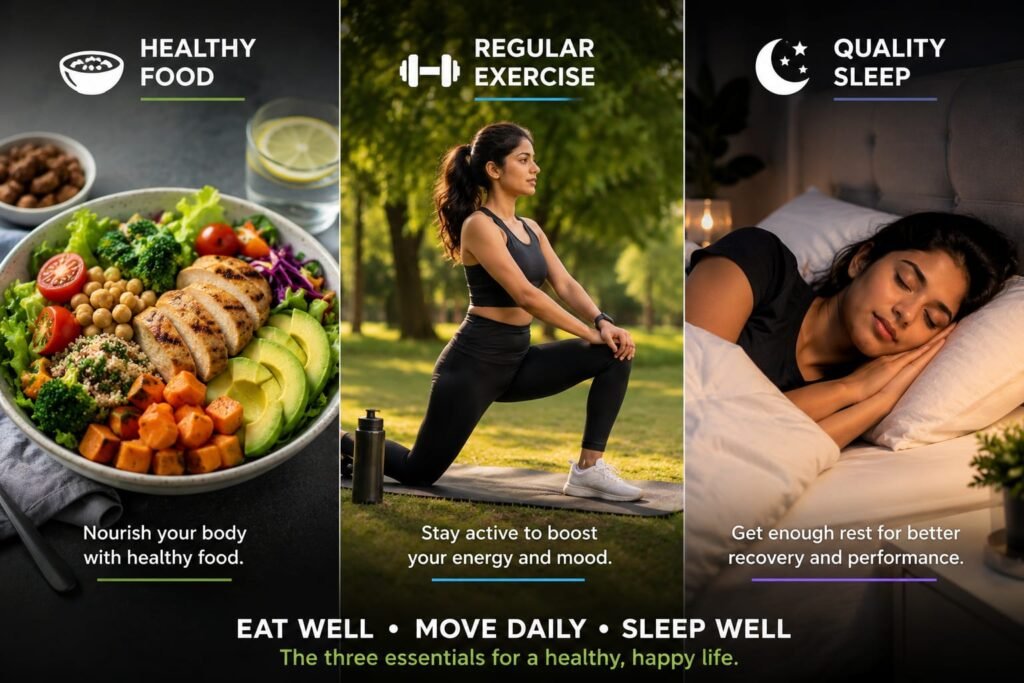
Your energy levels are influenced by several connected habits.
The three major areas to focus on are:
- Food: Give your body balanced meals containing carbohydrates, protein, healthy fats, vitamins, minerals, and enough fluids.
- Exercise: Stay physically active, but balance challenging workouts with easier movement and recovery.
- Sleep: Maintain a consistent sleep schedule and create a relaxing bedtime routine.
- Hydration: Drink enough fluids throughout the day, especially around exercise and in hot weather.
- Recovery: Rest is not laziness. It allows your body to adapt to training and prepare for your next workout.
- Consistency: Small healthy habits repeated regularly are generally more useful than short-term extreme approaches.
Why Do You Feel Low on Energy?
Feeling tired occasionally is normal. A busy day, hard workout, poor night’s sleep, or long period without food can temporarily reduce your energy.
However, frequent tiredness can have many possible causes. Your lifestyle, nutrition, sleep quality, stress, training load, and overall health can all play a role.
For fitness enthusiasts, one common mistake is assuming that more exercise always means better results. Training hard without enough food, sleep, or recovery can leave you feeling exhausted instead of stronger.
Think of your energy as something you need to fuel, use, and restore.
- Food provides fuel and nutrients.
- Exercise uses energy and helps maintain physical fitness.
- Sleep supports recovery and restoration.
- Rest helps your body adapt to physical stress.
A balanced approach brings these pieces together.
Part 1: Improve Energy Through Food
1. Start With Balanced Meals
One of the simplest ways to support steady energy is to build balanced meals.
Instead of relying heavily on foods that provide quick energy followed by a crash, combine different food groups.
A balanced meal can include:
- Whole grains or other carbohydrate sources
- Vegetables
- Fruits
- Protein-rich foods
- Healthy fats
- Water or another appropriate drink
For example, a meal could include brown rice, vegetables, dal, curd, and a small portion of nuts or seeds.
The exact foods can vary according to your preferences, culture, dietary pattern, and fitness goals.
2. Do Not Fear Carbohydrates
Carbohydrates are an important source of energy, particularly for people who exercise regularly.
Your body breaks down carbohydrates into glucose, which can be used for energy. During exercise, stored carbohydrate in the form of glycogen is also an important fuel source.
Good carbohydrate choices include:
- Oats
- Brown rice
- Whole-grain bread
- Potatoes
- Sweet potatoes
- Bananas
- Apples
- Beans and lentils
- Other whole grains
For fitness enthusiasts, carbohydrates can be particularly useful before demanding workouts.
The amount you need depends on factors such as your activity level, workout intensity, body size, and overall diet.
3. Include Enough Protein
Protein is best known for supporting muscle maintenance and repair, but it also plays an important role in a balanced diet.
Fitness enthusiasts often need to pay particular attention to their protein intake because regular training increases the importance of adequate nutrition for recovery.
Protein-rich foods include:
- Eggs
- Fish
- Chicken
- Milk
- Yogurt or curd
- Paneer
- Tofu
- Soy foods
- Lentils
- Chickpeas
- Beans
- Nuts and seeds
Rather than concentrating all your protein in one meal, spreading protein-containing foods across the day can be a practical approach.
4. Choose Healthy Fats
Fat provides energy and helps your body absorb certain vitamins.
Healthy sources can include:
- Nuts
- Seeds
- Peanut butter
- Avocado
- Olive oil
- Fatty fish
You do not need to completely remove fat from your diet to stay fit. Instead, focus on overall food quality and appropriate portions.
5. Eat Enough Food for Your Activity Level
Sometimes low energy is simply a sign that you are not eating enough to support your activity.
This can happen when someone increases their workout frequency while significantly reducing food intake.
Signs that your current routine may need reassessment can include:
- Feeling unusually tired during workouts
- Poor workout performance
- Difficulty recovering
- Persistent hunger
- Reduced motivation
- Feeling weak during normal activities
If you are intentionally losing weight, avoid extreme restriction. A qualified dietitian or healthcare professional can help you determine an appropriate nutrition strategy.
6. Stay Hydrated
Even mild dehydration can affect how you feel and perform physically.
Your fluid needs vary depending on:
- Weather
- Exercise intensity
- Exercise duration
- Sweating
- Body size
- Individual needs
A simple habit is to drink regularly throughout the day rather than waiting until you feel extremely thirsty.
During longer or intense workouts, particularly in hot conditions, fluid and electrolyte needs may increase.

Part 2: Improve Energy Through Exercise
Exercise may seem like something that uses energy, but regular physical activity can support overall fitness, mood, sleep quality, and daily functioning.
The key is finding the right balance.
7. Move Your Body Every Day
You do not need an intense workout every day to stay active.
Simple activities can add movement to your routine:
- Walking
- Cycling
- Stretching
- Yoga
- Swimming
- Dancing
- Household activities
- Recreational sports
If you spend many hours sitting, short movement breaks can also help you avoid being inactive for long periods.
8. Combine Different Types of Exercise
A well-rounded fitness routine can include several forms of training.
Aerobic Exercise
Walking, jogging, cycling, swimming, and similar activities challenge your cardiovascular system.
Strength Training
Resistance exercises can help build and maintain muscle and support physical strength.
Examples include:
- Squats
- Lunges
- Push-ups
- Rows
- Resistance-band exercises
- Weight training
Mobility and Flexibility
Gentle stretching and mobility exercises can help you move comfortably and complement other forms of training.
A balanced program does not have to be complicated. The right combination depends on your fitness level and goals.
9. Avoid Training Too Hard Every Day
More training is not automatically better.
Your body needs time to recover after challenging exercise. If you repeatedly train hard without adequate recovery, you may experience persistent tiredness, reduced performance, soreness, or loss of motivation.
Try alternating harder sessions with easier activities or rest days when appropriate.
For example:
Monday: Strength training
Tuesday: Easy walking or mobility
Wednesday: Cardio
Thursday: Recovery or light activity
Friday: Strength training
Saturday: Recreational activity
Sunday: Rest or gentle movement
This is only an example. Your routine should match your experience, schedule, goals, and physical condition.
10. Warm Up Before Exercise
A warm-up prepares you mentally and physically for your workout.
A simple warm-up can include:
- Easy walking
- Light cycling
- Dynamic movements
- Gentle bodyweight exercises
- Movement-specific preparation
Spend several minutes gradually increasing your activity rather than immediately starting at maximum intensity.
11. Cool Down and Recover
After a workout, gradually reducing your activity can help you transition from exercise to normal daily activity.
Recovery also includes:
- Eating nutritious meals
- Drinking fluids
- Getting enough sleep
- Taking rest days
- Managing stress
Remember that fitness improvements happen through a combination of training and recovery.

Part 3: Improve Energy Through Sleep
Sleep is one of the most important parts of a healthy lifestyle.
You can eat nutritious food and follow a great workout plan, but consistently poor sleep can make it harder to feel energetic and perform at your best.
12. Aim for Enough Sleep
Most adults need around 7–9 hours of sleep per night, although individual needs vary.
The quality and regularity of your sleep matter as well.
If you frequently sleep too little, you may notice:
- Daytime tiredness
- Difficulty concentrating
- Reduced motivation
- Changes in mood
- Poorer exercise performance
- Increased cravings for highly processed foods
Making sleep a priority can therefore support both your fitness routine and your everyday life.
13. Keep a Consistent Sleep Schedule
Try to go to bed and wake up at roughly similar times each day.
A consistent schedule can help your body develop a regular sleep-wake rhythm.
This does not mean every night must be exactly the same. However, large changes in your sleep schedule can make it harder for some people to maintain good sleep habits.
14. Create a Relaxing Bedtime Routine
Give your brain time to slow down before going to sleep.
Your routine might include:
- Reading a book
- Taking a warm shower
- Gentle stretching
- Listening to calm music
- Preparing for the next day
- Practicing relaxation techniques
Try to reduce activities that keep you mentally stimulated immediately before bed.
15. Manage Evening Screen Time
Phones, computers, and televisions can become part of our bedtime routine.
Instead of scrolling endlessly at night, consider putting your devices aside before bedtime when practical.
You can use that time for relaxing activities such as reading, stretching, or preparing your clothes and meals for the next day.
16. Make Your Bedroom Comfortable
A sleep-friendly environment can make it easier to relax.
Consider:
- Keeping the room comfortably cool
- Reducing unnecessary noise
- Making the room sufficiently dark
- Using a comfortable mattress and pillow
- Keeping work-related distractions outside the sleeping area when possible
Your bedroom should ideally feel like a place for rest rather than constant activity.

How Food, Exercise, and Sleep Work Together
Food, exercise, and sleep should not be treated as completely separate habits.
They influence one another.
For example, eating well can provide the nutrients and energy needed for exercise. Exercise can support physical fitness and may help some people sleep better. Good sleep can help you feel more prepared for your next workout.
This creates a positive cycle:
Nutritious food → Better fuel → Quality exercise → Recovery → Good sleep → Better energy
The cycle does not have to be perfect every day.
What matters most is what you do consistently over weeks and months.
A Simple Daily Energy Routine
Here is an example of how you could organize your day.
Morning
- Wake up at a consistent time.
- Drink water.
- Eat a balanced breakfast if it suits your routine.
- Get some natural light.
- Do light movement or exercise.
Afternoon
- Eat a nutritious lunch.
- Drink fluids regularly.
- Take short movement breaks if you work or study sitting down.
- Choose a balanced snack when hungry.
Evening
- Complete your workout if you prefer evening training.
- Eat a balanced dinner.
- Allow enough time to relax.
- Reduce excessive screen use before bed.
Night
- Follow a calming bedtime routine.
- Keep your sleep schedule consistent.
- Aim for enough sleep.
This routine does not need to be followed perfectly. Adjust it according to your lifestyle.

Pre-Workout Nutrition for Better Energy
What you eat before exercise can influence how you feel during training.
If you have several hours before your workout, you may choose a balanced meal containing carbohydrates and protein.
Examples include:
- Rice with dal
- Oats with yogurt and fruit
- Whole-grain toast with eggs
- Banana with yogurt
- A balanced sandwich
If you have only a short time before exercising, a smaller snack may be more comfortable.
For example:
- Banana
- Fruit
- Yogurt
- Toast
Your individual tolerance matters. Some people prefer exercising with a relatively empty stomach, while others perform better after eating.
Post-Workout Nutrition and Recovery
After exercise, your body needs recovery.
A meal or snack containing protein and carbohydrates can be useful after training, particularly after demanding sessions.
Examples include:
- Eggs with whole-grain toast
- Chicken with rice and vegetables
- Paneer with roti and vegetables
- Yogurt with fruit and oats
- Dal with rice and vegetables
You do not need expensive supplements to build a healthy diet. Regular foods can provide many of the nutrients your body needs.
If you have specific sports nutrition goals, a qualified sports dietitian can help personalize your plan.
Common Mistakes That Can Reduce Energy
1. Skipping Meals Frequently
Going long periods without eating may leave some people feeling tired or distracted.
2. Depending on Sugary Foods
Sugary foods can provide quick energy, but relying heavily on them is not a good substitute for balanced meals.
3. Drinking Too Little Water
Poor hydration can contribute to fatigue and reduced exercise performance.
4. Exercising Without Recovery
Constantly pushing your body without enough rest can increase fatigue.
5. Sacrificing Sleep for Exercise
An extra workout is not necessarily worth regularly losing sleep.
6. Doing Too Much Too Soon
Suddenly increasing workout intensity or duration can leave you excessively tired and increase injury risk.
7. Ignoring Stress
Mental stress can affect how energetic you feel. Recovery should include mental as well as physical rest.
Key Pointers
Here are the most important lessons to remember:
- Eat balanced meals rather than depending on quick-energy foods.
- Include carbohydrates to support your body’s energy needs.
- Get adequate protein to support muscle maintenance and recovery.
- Choose healthy fat sources as part of a balanced diet.
- Drink fluids regularly and pay attention to hydration during exercise.
- Stay physically active throughout the week.
- Include strength, aerobic, and mobility work when appropriate.
- Avoid intense training every day without adequate recovery.
- Aim for around 7–9 hours of sleep if you are an adult.
- Maintain a consistent sleep schedule.
- Create a relaxing bedtime routine.
- Listen to your body and adjust your training when recovery is poor.
- Focus on consistency rather than perfection.

When Should You Seek Professional Help?
Lifestyle changes can improve energy for many people, but persistent or severe fatigue should not simply be blamed on a busy lifestyle.
Speak with a healthcare professional if your tiredness:
- Continues for a long time
- Interferes with daily activities
- Is unexplained or unusually severe
- Comes with other concerning symptoms
- Continues despite improving your sleep, nutrition, and activity habits
A healthcare professional can help determine whether an underlying health issue, medication, nutritional problem, sleep disorder, or another factor could be contributing to fatigue.
Conclusion
Improving your energy naturally is not about finding one magical food, exercise, or sleep trick.
It is about creating a balanced lifestyle.
Food gives your body the fuel and nutrients it needs. Exercise helps build fitness and physical capacity. Sleep gives your body and mind important time to recover.
For fitness enthusiasts, balancing these three areas is especially valuable. Instead of constantly pushing harder, focus on training intelligently, eating enough nutritious food, staying hydrated, and giving your body enough time to recover.
Start with small changes. Drink more water, add a nutritious meal, take a daily walk, improve your bedtime routine, or schedule a recovery day.
Over time, these simple habits can become part of a sustainable lifestyle that supports better energy, fitness, and overall well-being.