
How to Manage Stress Naturally With Exercise and Healthy Habits
Introduction
Stress is a normal part of life. Almost everyone experiences stress at some point. Work deadlines, studies, financial concerns, family responsibilities, relationship problems, lack of sleep, and daily challenges can all make us feel stressed.
A small amount of stress can sometimes help us stay focused and complete important tasks. However, when stress becomes frequent or difficult to manage, it can affect our mood, sleep, energy, concentration, and overall well-being.
The good news is that you do not always need complicated solutions to start managing everyday stress. Simple habits such as regular exercise, healthy eating, good sleep, relaxation, time management, and social connection can support better physical and mental health.
The World Health Organization (WHO) states that regular physical activity can benefit both physical and mental health and can help reduce symptoms of anxiety and depression. WHO recommends that most adults aim for 150–300 minutes of moderate-intensity physical activity each week, or an equivalent amount of vigorous activity. (World Health Organization)
However, managing stress naturally does not mean ignoring serious symptoms. If stress is persistent, overwhelming, or interfering with daily life, speaking with a qualified healthcare professional is important. The National Institute of Mental Health (NIMH) recommends seeking professional help when stress or related symptoms become difficult to cope with or interfere with everyday life. (National Institute of Mental Health)
Quick Summary
If you want to manage stress naturally, focus on small habits that you can maintain consistently.
The most useful habits include:
- Exercise regularly.
- Walk more during the day.
- Get enough quality sleep.
- Eat balanced and regular meals.
- Drink enough water.
- Practice slow breathing or relaxation exercises.
- Spend time with supportive people.
- Take breaks from screens and work.
- Spend some time outdoors.
- Organize your daily priorities.
- Reduce excessive caffeine if it makes you feel anxious or restless.
- Make time for hobbies and enjoyable activities.
- Ask for professional help when stress becomes difficult to manage.
The goal is not to eliminate every stressful situation. Instead, the goal is to build healthy ways of responding to everyday stress.
What Is Stress?
Stress is the body’s response to a challenge, pressure, or demand. For example, you may feel stressed before an examination, important meeting, interview, presentation, or difficult conversation.
Stress can affect both the mind and body.
Common experiences may include:
- Feeling worried or overwhelmed
- Difficulty concentrating
- Irritability
- Muscle tension
- Headaches
- Changes in sleep
- Feeling tired
- Changes in appetite
- Racing thoughts
- Feeling restless
NIMH explains that stress can be a response to an external cause and may improve after the stressful situation is resolved. However, persistent stress that interferes with everyday life may require additional support. (National Institute of Mental Health)
This is why learning healthy coping strategies is important.
Why Exercise Can Help With Stress
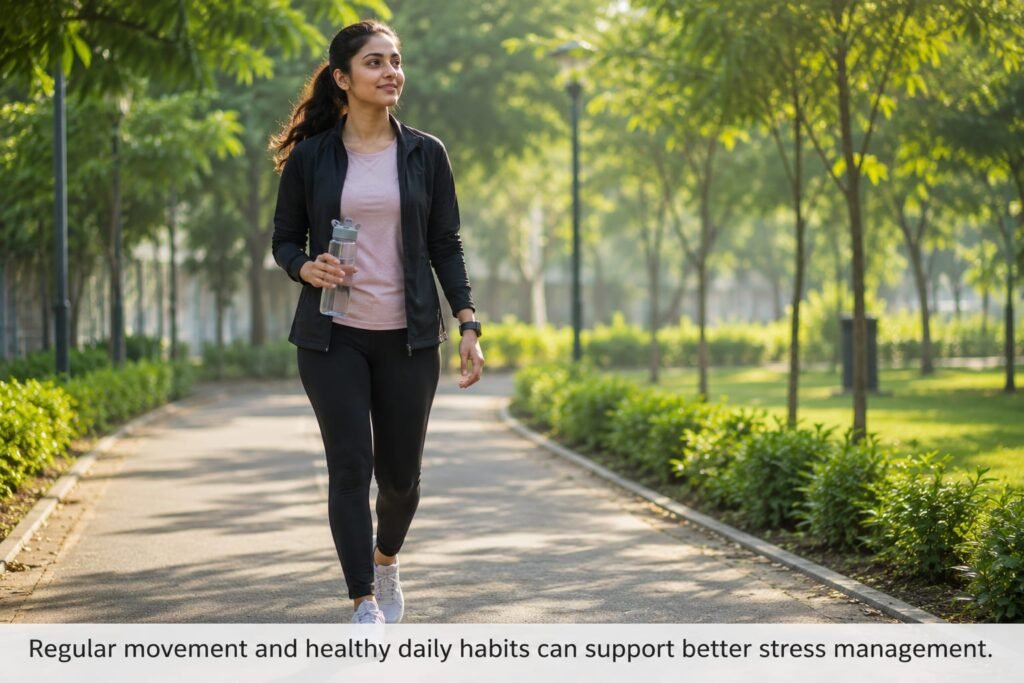
Exercise is one of the simplest habits you can add to a stress-management routine.
When you exercise, you move your body, change your environment, and give yourself time away from stressful thoughts or activities. Physical activity is also associated with benefits for mental health and overall well-being. (World Health Organization)
You do not need to become an athlete to benefit from movement.
A simple walk, cycling session, dance workout, yoga session, or home workout can be a useful starting point.
1. Walking
Walking is one of the easiest forms of physical activity.
You can walk:
- In a park
- Around your neighborhood
- To nearby shops
- During a lunch break
- After dinner
- On a treadmill
- While listening to relaxing music or a podcast
If you currently do very little physical activity, start with a comfortable amount and gradually increase it.
NIMH also notes that even smaller amounts of exercise can add up and recommends regular exercise as part of caring for mental health. (National Institute of Mental Health)
2. Strength Training
Strength training is another useful form of exercise.
You can use:
- Bodyweight exercises
- Resistance bands
- Light dumbbells
- Gym machines
- Household items when appropriate and safe
Simple movements may include squats, wall push-ups, lunges, and other beginner-friendly exercises.
Strength training can also give you a sense of progress. Seeing yourself become stronger or more confident can encourage you to continue your routine.
If you are new to strength training, start slowly and focus on correct technique rather than lifting heavy weights.
3. Yoga and Stretching
Yoga combines movement, balance, breathing, and relaxation.
Gentle stretching can also be useful if you spend many hours sitting at a desk.
Try a short routine involving:
- Neck movements
- Shoulder stretches
- Gentle back stretches
- Leg stretches
- Slow breathing
- Relaxation at the end
Remember that flexibility varies from person to person. Avoid forcing your body into uncomfortable positions.
4. Cycling, Swimming, or Dancing
You do not have to follow a traditional workout program.
Choose activities you actually enjoy.
For example:
- Cycling
- Swimming
- Dancing
- Playing badminton
- Hiking
- Playing a recreational sport
- Walking with friends
Enjoyable exercise is often easier to maintain than an activity you dislike.
WHO emphasizes that physical activity includes many types of movement, including walking, cycling, sports, recreation, transportation, work, and household activities. (World Health Organization)
How Much Exercise Do You Need?
For adults aged 18–64, WHO recommends:
- 150–300 minutes of moderate-intensity aerobic activity per week, or
- 75–150 minutes of vigorous-intensity aerobic activity per week, or
- An equivalent combination of moderate and vigorous activity.
WHO also recommends muscle-strengthening activities involving major muscle groups on two or more days each week. (World Health Organization)
But do not let these numbers discourage you if you are starting from zero.
Some movement is better than none.
You can begin with a 10–15 minute walk and gradually build your activity level.
Example beginner weekly routine
| Day | Activity |
|---|---|
| Monday | 20–30 minute walk |
| Tuesday | Light strength workout |
| Wednesday | 20–30 minute walk |
| Thursday | Yoga or stretching |
| Friday | 20–30 minute walk |
| Saturday | Cycling, dancing, or another enjoyable activity |
| Sunday | Rest or gentle movement |
Your routine should match your current fitness level, schedule, and health needs.
Healthy Eating and Stress Management
Exercise is important, but your daily food habits also matter.
A balanced diet can support your energy and overall health.
Instead of focusing on extreme diets, build meals around a variety of nutritious foods.
Try to include:
- Vegetables
- Fruits
- Whole grains
- Beans and lentils
- Eggs
- Fish or other protein sources
- Nuts and seeds
- Yogurt or other suitable dairy products
- Healthy sources of fats
- Plenty of water
Eating regular meals can also help you avoid becoming extremely hungry and making impulsive food choices.
NIMH recommends eating healthy, regular meals and staying hydrated as part of caring for mental health. (National Institute of Mental Health)
Limit Excessive Caffeine
Coffee, tea, energy drinks, and other caffeinated products can affect people differently.
Some people may notice increased:
- Restlessness
- Nervousness
- Difficulty sleeping
- Racing thoughts
If you notice that caffeine makes your stress or sleep worse, consider reducing your intake, especially later in the day.
NIMH specifically recommends avoiding excessive caffeine when managing stress and anxiety. (National Institute of Mental Health)
You do not necessarily need to completely eliminate caffeine. The important point is to notice how your body responds.
Sleep Is an Important Part of Stress Management
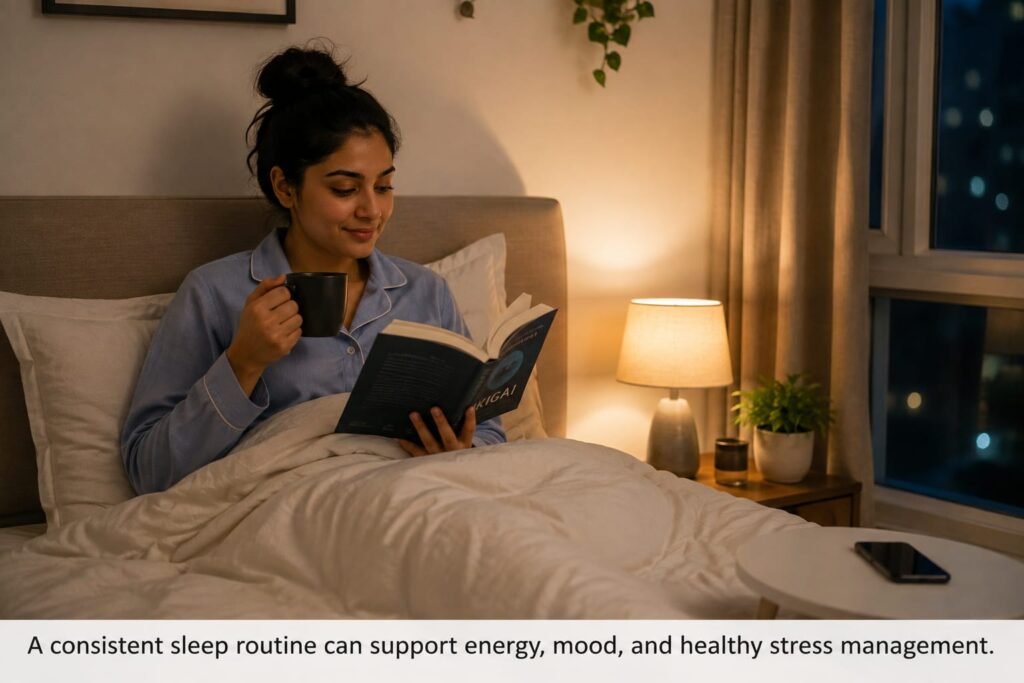
Poor sleep and stress can influence each other.
When you are stressed, you may find it difficult to relax at night. When you do not sleep well, you may feel tired and less able to handle everyday challenges.
For adults, NIMH identifies 7–9 hours of sleep as a useful target in its guidance for mild mental-health symptoms. (National Institute of Mental Health)
Build a simple sleep routine:
- Go to bed at a similar time each night.
- Wake up at a consistent time.
- Keep your bedroom comfortable.
- Reduce unnecessary screen use before bedtime.
- Avoid heavy caffeine intake late in the day.
- Give yourself time to relax before sleeping.
- Keep your evening routine simple.
You do not need a perfect bedtime routine. Consistency is often more realistic than trying to follow a complicated routine.
Practice Deep Breathing
When you feel stressed, your body may become tense and your breathing may become faster or shallower.
Slow breathing can be used as a simple relaxation technique.
Try this simple exercise:
- Sit comfortably.
- Relax your shoulders.
- Breathe in slowly.
- Breathe out slowly.
- Repeat for several breaths.
- Focus your attention on your breathing.
Do not force your breathing or hold your breath for an uncomfortable amount of time.
NIMH lists breathing and relaxation exercises among strategies that may help people cope with stress. (National Institute of Mental Health)
Take Short Breaks During a Busy Day
Many people try to work or study for several hours without stopping.
This can leave you mentally exhausted.
Instead, consider taking short breaks.
During a break you could:
- Stand up.
- Walk around.
- Stretch.
- Drink water.
- Look outside.
- Take a few slow breaths.
- Talk briefly with someone.
- Step away from your screen.
These small breaks can make your day feel more manageable.
Spend Time Outdoors
Spending time outdoors can be another simple way to add movement and relaxation to your day.
You might:
- Walk in a park.
- Sit in a garden.
- Go for an evening walk.
- Cycle outside.
- Exercise in an open area.
- Spend time with friends outdoors.
Outdoor time can also make exercise feel less repetitive.
The goal is not to create another task that makes you stressed. Choose something that feels enjoyable and realistic.
Connect With People You Trust
Stress can feel heavier when you try to handle everything alone.
Talking with someone you trust can provide emotional support.
You might talk to:
- A close friend
- A family member
- A teacher or mentor
- A colleague
- A counselor
- A healthcare professional
You do not always need someone to solve the problem. Sometimes simply expressing what you are experiencing can make a situation feel more manageable.
NIMH recommends reaching out to friends and family who help you cope in positive ways. (National Institute of Mental Health)
Create a Simple Daily Routine
An unpredictable schedule can make everyday responsibilities feel overwhelming.
A basic routine can help you know what needs to be done.
For example:
Morning
- Wake up at a consistent time.
- Drink water.
- Eat breakfast if appropriate for you.
- Spend a few minutes stretching or walking.
- Identify your main priorities.
Afternoon
- Eat a balanced meal.
- Take short breaks.
- Walk for a few minutes.
- Stay hydrated.
- Complete important work or study tasks.
Evening
- Have a balanced dinner.
- Take a gentle walk.
- Reduce unnecessary screen time.
- Do something relaxing.
- Prepare for sleep.
Your routine does not have to look perfect.
A routine should support your life, not control it.
Use Time Management to Reduce Daily Pressure
Sometimes stress comes from having too many things to do at the same time.
Instead of trying to complete everything immediately, make a simple priority list.
Divide tasks into:
Must do today
Important tasks that cannot reasonably wait.
Should do soon
Tasks that are useful but not urgent.
Can wait
Tasks that can be completed later.
This simple system can reduce the feeling that everything is urgent.
NIMH also recommends setting goals and priorities and learning to say no when you are taking on too much. (National Institute of Mental Health)
Make Time for Hobbies
Stress management should not be only about exercise, work, and responsibilities.
Enjoyable activities matter too.
You could:
- Read a book.
- Listen to music.
- Cook.
- Paint.
- Garden.
- Watch a favorite show.
- Play a sport.
- Spend time with friends.
- Learn a new skill.
- Take photographs.
- Write in a journal.
NIMH recommends making time for low-stress activities that you enjoy. (National Institute of Mental Health)
A hobby does not need to be productive.
Sometimes the value is simply that you enjoy doing it.
Try Journaling
Writing down your thoughts can help you understand what is bothering you.
You can keep your journal very simple.
At the end of the day, write:
What stressed me today?
How did I respond?
What was within my control?
What can I do differently tomorrow?
What went well today?
You do not need to write several pages.
Even a few sentences can help you notice patterns in your stress.
NIMH lists keeping a journal as one possible coping strategy. (National Institute of Mental Health)
Reduce Unhealthy Stress-Coping Habits
When people feel stressed, they may look for quick ways to feel better.
Some coping habits may create additional problems.
Examples include:
- Excessive alcohol use
- Smoking or tobacco use
- Excessive caffeine
- Constantly scrolling social media
- Skipping meals
- Staying awake very late
- Avoiding physical activity
- Eating excessively because of stress
- Isolating yourself from supportive people
Instead, try replacing one unhealthy habit with a healthier alternative.
For example:
Instead of: scrolling for an hour when overwhelmed
Try: taking a 10-minute walk.
Instead of: skipping meals
Try: preparing a simple balanced meal.
Instead of: staying up late worrying
Try: writing down tomorrow’s tasks and following a relaxing bedtime routine.
A Simple 7-Day Natural Stress-Management Challenge
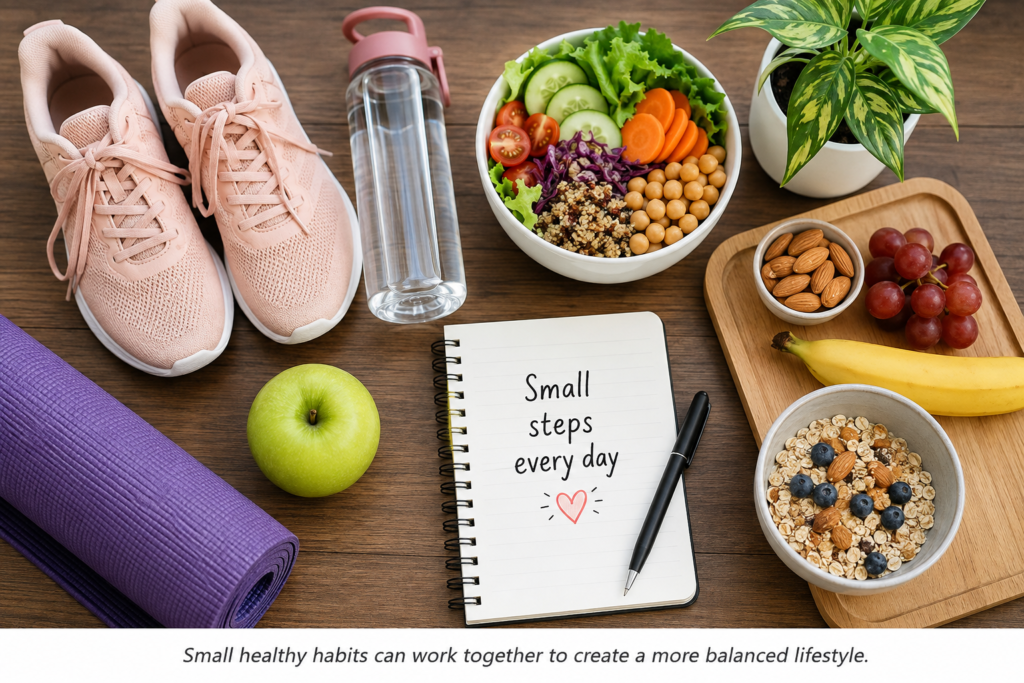
If you are not sure where to begin, try this simple one-week challenge.
Day 1 — Take a Walk
Go for a comfortable 15–20 minute walk.
Day 2 — Improve Your Sleep Routine
Set a consistent bedtime and reduce unnecessary screen use before sleep.
Day 3 — Eat Regular Balanced Meals
Focus on nutritious foods and adequate hydration.
Day 4 — Practice Breathing
Spend five minutes practicing slow, comfortable breathing.
Day 5 — Connect With Someone
Call or meet a supportive friend or family member.
Day 6 — Do Something You Enjoy
Spend at least 30 minutes on a hobby or relaxing activity.
Day 7 — Review Your Week
Ask yourself:
- What made me feel better?
- Which habit was easiest?
- Which habit do I want to continue?
- What caused the most stress?
- What can I change next week?
The purpose of this challenge is not perfection.
The goal is to discover which healthy habits fit naturally into your lifestyle.
Common Mistakes When Managing Stress
1. Trying to Change Everything at Once
Starting exercise, changing your entire diet, sleeping earlier, meditating, and completely changing your schedule at the same time can feel overwhelming.
Start with one or two habits.
2. Exercising Too Hard
Exercise should support your health, not become another source of stress.
Start at a level that matches your fitness and gradually progress.
3. Expecting Immediate Results
Healthy habits usually require consistency.
Do not stop after a few days simply because you do not feel dramatically different.
4. Ignoring Sleep
Working longer hours does not always mean getting more done.
Sleep is an important part of physical and mental well-being.
5. Comparing Yourself With Others
Your stress levels, responsibilities, fitness level, and lifestyle are different from someone else’s.
Focus on your own progress.
6. Trying to Handle Serious Problems Alone
Natural habits can support everyday stress management, but they are not a replacement for professional care when symptoms are severe or persistent.
When Should You Seek Professional Help?
Exercise and healthy habits can be helpful, but they are not a cure for every mental-health problem.
Consider speaking with a qualified healthcare professional if:
- Stress is interfering with your daily life.
- You cannot manage your usual responsibilities.
- Sleep problems continue.
- You feel persistently overwhelmed.
- You are experiencing ongoing anxiety or low mood.
- You are withdrawing from activities you normally enjoy.
- Your symptoms are getting worse.
- Your coping methods are becoming unhealthy.
NIMH recommends seeking professional help when symptoms become difficult to manage or interfere with everyday life. (National Institute of Mental Health)
If you have a medical condition, are pregnant, have an injury, or are unsure whether a particular exercise program is appropriate for you, speak with a qualified healthcare professional before making major changes to your exercise routine.
Key Pointers for Managing Stress Naturally
Here are the most important points to remember:
Move Your Body
Regular physical activity can support physical and mental well-being.
Eat Balanced Meals
Choose a variety of nutritious foods and maintain regular eating habits.Stay Hydrated
Drink enough water throughout your day based on your individual needs.
Prioritize Sleep
Maintain a consistent sleep routine and give your body enough time to rest.
Practice Relaxation
Try slow breathing, gentle stretching, meditation, or another calming activity.
Take Breaks
Short breaks can make busy days feel more manageable.
Stay Connected
Talk to people who provide positive support.
Manage Screen Time
Take regular breaks from unnecessary scrolling and screens.
Organize Your Tasks
Choose priorities instead of trying to complete everything at once.
Be Patient With Yourself
Healthy change takes time. Progress does not need to be perfect.

Frequently Asked Questions
Can exercise really help reduce stress?
Yes. Regular physical activity is associated with mental-health benefits, including reduced symptoms of anxiety and depression and improved overall well-being. WHO recommends regular physical activity for adults and emphasizes that some movement is better than none. (World Health Organization)
What is the best exercise for stress?
There is no single best exercise for everyone. Walking, cycling, swimming, yoga, dancing, strength training, and recreational sports can all be useful. The best choice is an activity that is safe, appropriate for your fitness level, and enjoyable enough to maintain.
How much exercise should beginners do?
Beginners can start with a comfortable amount of activity and gradually increase it. WHO’s adult recommendation is 150–300 minutes of moderate activity per week, but people who currently do very little activity should not feel that they must reach that target immediately. (World Health Organization)
Can healthy food reduce stress?
A balanced diet supports overall health and energy. Regular, nutritious meals and adequate hydration are recommended as part of healthy mental-health self-care. (National Institute of Mental Health)
Does sleep affect stress?
Sleep and stress are closely connected. Maintaining a regular sleep schedule and getting enough sleep can support mental and physical well-being. NIMH includes adequate sleep as part of self-care for mental health. (National Institute of Mental Health)
Is stress always bad?
No. Stress is a normal response to challenges. Short-term stress can sometimes help a person respond to a situation. The concern is when stress becomes persistent, overwhelming, or interferes with everyday life. (National Institute of Mental Health)
Conclusion
Learning how to manage stress naturally with exercise and healthy habits does not require a perfect lifestyle.
You can begin with small changes.
Take a short walk. Eat a balanced meal. Drink water. Get enough sleep. Take breaks from work. Practice slow breathing. Spend time with people you trust. Make room for hobbies and activities that bring you enjoyment.
The most important thing is consistency.
You do not need to completely remove stress from your life. Instead, focus on building healthy habits that help you respond to everyday challenges in a better way.
Regular physical activity, healthy eating, adequate sleep, relaxation, social connection, and good time management can all become valuable parts of a balanced lifestyle. WHO and NIMH both support regular physical activity and healthy self-care practices as important components of overall physical and mental well-being. (World Health Organization)
At the same time, remember that natural stress-management techniques are not a substitute for professional care when stress becomes severe or persistent. If stress is affecting your ability to function or enjoy everyday life, reaching out to a qualified healthcare professional is an important and healthy step.
Start small, stay consistent, and give yourself time. Your health does not depend on doing everything perfectly—it depends on building habits that you can realistically continue.