
How to Start a Fitness Journey as a Beginner: A Complete Guide
Introduction
Starting a fitness journey can feel exciting, but it can also feel confusing. You may not know which exercises to do, how often to work out, what to eat, or how to stay motivated. You may also see people online doing difficult workouts and wonder if you need to do the same.
The good news is that you do not need to be extremely fit to start. You only need to take the first small step.
A successful fitness journey is not about exercising for hours every day or following a strict diet. It is about creating healthy habits that you can continue for months and years. Walking regularly, eating balanced meals, getting enough sleep, drinking enough water, managing stress, and doing simple strength exercises can all become part of a healthy lifestyle.
According to the World Health Organization (WHO), adults should aim for 150–300 minutes of moderate-intensity physical activity per week, or 75–150 minutes of vigorous activity, along with muscle-strengthening activities on at least two days per week. However, people who are inactive should start with smaller amounts and gradually increase their activity.
This guide explains how to start a fitness journey as a beginner, how to create realistic goals, what exercises to choose, what mistakes to avoid, and how to stay consistent
.
Quick Summary
If you are a complete beginner, remember these simple points:
- Start slowly instead of doing too much at once.
- Choose exercises that you enjoy.
- Walk regularly and increase your daily movement.
- Include strength training in your routine.
- Do not ignore rest and recovery.
- Eat balanced meals instead of following extreme diets.
- Drink water regularly.
- Sleep well and maintain a consistent sleep schedule.
- Set small and realistic fitness goals.
- Track your progress.
- Do not compare your journey with someone else’s.
- Focus on consistency rather than perfection.
- Increase exercise gradually as your fitness improves.
- Get professional medical advice before starting exercise if you have a health condition, injury, or other concern.
The most important rule is simple: start where you are and improve step by step.
Why Should You Start a Fitness Journey?
Fitness is not only about losing weight or building muscles. Regular physical activity can support your physical and mental well-being.
WHO states that regular physical activity can provide significant physical and mental health benefits. It can help with cardiovascular health, diabetes prevention and management, mental well-being, brain health, and overall quality of life.
A fitness routine may also help you:
- Improve stamina
- Build stronger muscles
- Support healthy bones
- Improve flexibility and mobility
- Feel more energetic
- Manage body weight
- Improve mood
- Reduce long periods of sitting
- Build self-confidence
- Create healthier daily habits
You do not have to become an athlete to enjoy these benefits. Everyday activities such as walking, cycling, household work, dancing, recreational activities, and planned exercise all count as physical activity.
Step 1: Understand Your Current Fitness Level
Before creating a workout plan, understand where you are starting.
If you have not exercised for a long time, do not suddenly start with advanced workouts. Your body needs time to adapt.
Ask yourself:
- How active am I currently?
- Can I walk comfortably for 20–30 minutes?
- How often do I move during the day?
- Have I done strength training before?
- Do I have any previous injuries?
- What type of exercise do I enjoy?
- How much time can I realistically give to exercise?
Your answers will help you create a plan that fits your lifestyle.
Remember, your starting point does not define your final result.
Step 2: Set Realistic Fitness Goals
One of the biggest beginner mistakes is setting unrealistic goals.
For example, saying, “I will exercise for two hours every day,” may sound motivating, but it can be difficult to maintain.
Instead, create smaller goals.
Examples of beginner fitness goals:
- Walk for 20 minutes, five days a week.
- Complete three beginner workouts per week.
- Drink more water every day.
- Add vegetables to two meals each day.
- Sleep at a consistent time.
- Learn five basic strength exercises.
- Improve your walking time gradually.
Your goal should be specific and realistic.
Instead of saying:
“I want to get fit.”
Try:
“I will walk for 25 minutes after work, five days a week.”
A clear goal makes it easier to know what you need to do.
Step 3: Choose Exercises You Enjoy
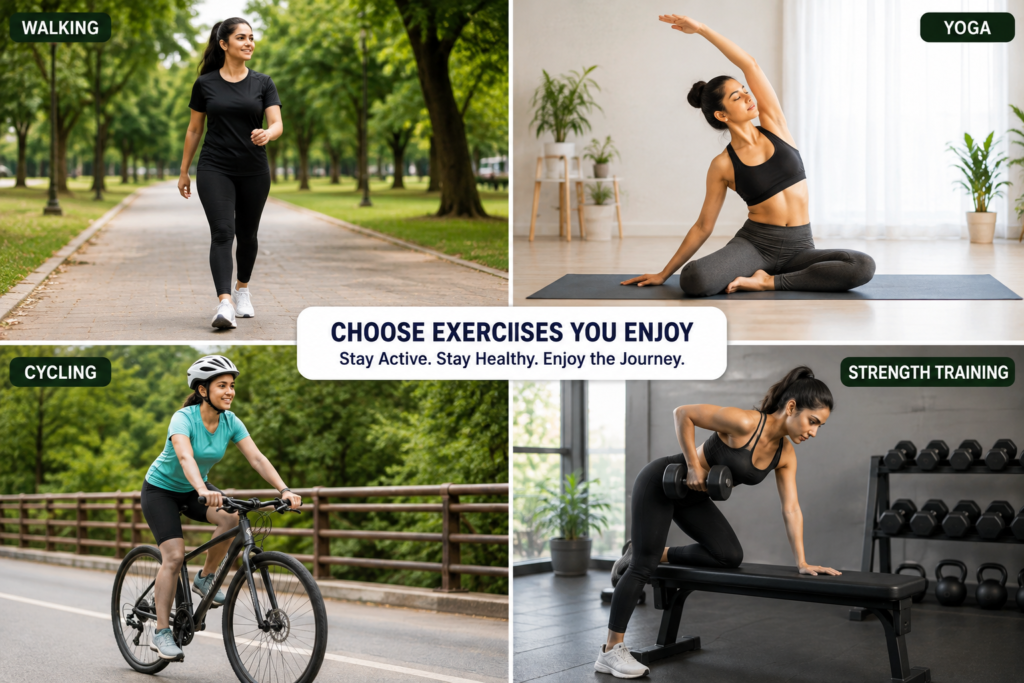
There is no single “best” exercise for everyone.
Some people enjoy walking. Others prefer dancing, cycling, swimming, yoga, running, gym workouts, sports, or home workouts.
The best exercise is often one that you enjoy enough to continue doing.
Good beginner activities include:
- Walking
- Brisk walking
- Cycling
- Swimming
- Dancing
- Yoga
- Bodyweight exercises
- Light resistance training
- Beginner gym workouts
- Recreational sports
- Stretching and mobility exercises
If you dislike running, you do not have to run.
If you dislike the gym, you can exercise at home.
Fitness should fit into your lifestyle instead of making your life unnecessarily difficult.
Step 4: Start With Walking
Walking is one of the easiest activities for beginners.
You do not need expensive equipment or advanced skills. You can walk outside, at a park, around your neighborhood, or even indoors.
If you are currently inactive, start with a comfortable amount of walking. For example, you might begin with 10–20 minutes and gradually increase the time.
As your fitness improves, you can walk faster or for a longer duration.
WHO emphasizes that some physical activity is better than none, and all movement can count toward being more active.
Beginner walking idea:
Week 1: 15–20 minutes, 4 days
Week 2: 20–25 minutes, 4–5 days
Week 3: 25–30 minutes, 5 days
Week 4: 30 minutes, 5 days
This is only an example. Your routine should depend on your current fitness level and how your body responds.
Step 5: Add Strength Training
Strength training is an important part of a complete fitness routine.
You do not have to lift very heavy weights as a beginner.
You can start with bodyweight exercises and light resistance.
Beginner strength exercises:
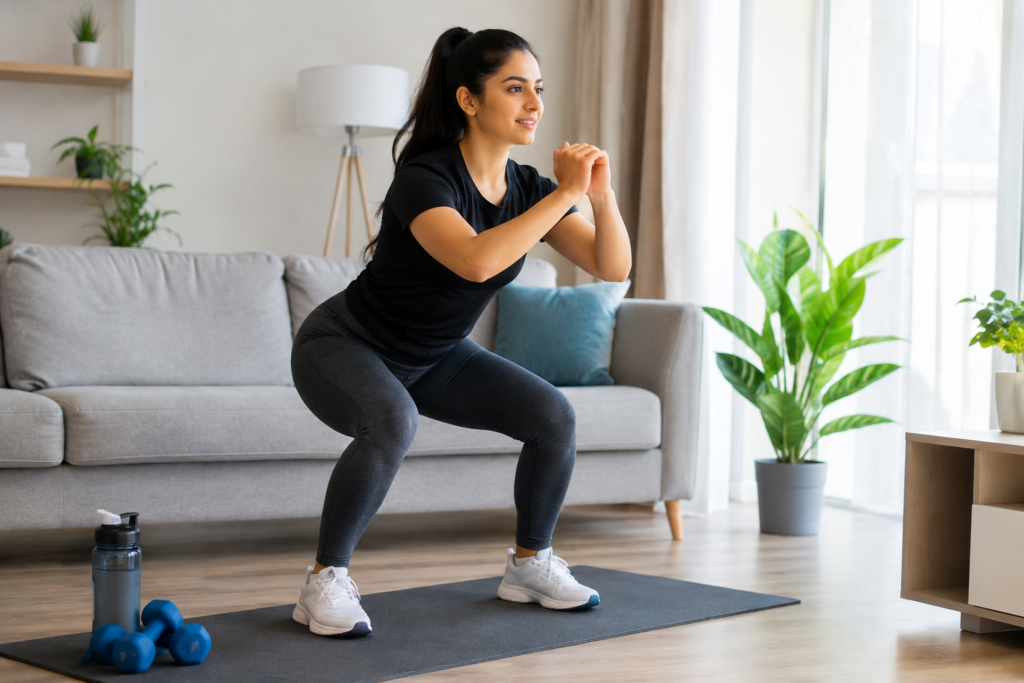
- Squats
- Wall push-ups
- Knee push-ups
- Glute bridges
- Step-ups
- Bird dogs
- Light dumbbell exercises
- Resistance-band exercises
Strength training can help you develop stronger muscles and improve your ability to perform everyday activities.
WHO recommends muscle-strengthening activities involving major muscle groups on two or more days per week for adults.
Start with simple movements and focus on learning proper technique.
Step 6: Try This Simple Beginner Workout
Here is an example of a simple beginner workout.
Warm-up – 5 minutes
Start with:
- Easy walking
- Arm circles
- Shoulder rolls
- Gentle leg movements
- Marching in place
Main workout
Perform the following exercises at a comfortable level:
1. Bodyweight Squats – 8–12 repetitions
Keep your feet comfortable and lower your body slowly. Keep the movement controlled.
2. Wall Push-Ups – 8–12 repetitions
Place your hands against a wall and perform controlled push-ups.
3. Glute Bridges – 10–15 repetitions
Lie on your back, bend your knees, and gently lift your hips.
4. Step-Ups – 8–10 repetitions per leg
Use a stable, low step and move carefully.
5. Bird Dog – 6–10 repetitions per side
Move slowly and focus on balance and control.
Start with one or two rounds. As you become more comfortable, you can gradually increase the amount of work.
If an exercise causes sharp pain, stop and seek appropriate professional advice.
Step 7: Do Not Forget Flexibility and Mobility
Flexibility and mobility are also useful parts of a fitness routine.
Gentle stretching can be included after exercise or as a separate activity.
You can try:
- Shoulder stretches
- Hamstring stretches
- Calf stretches
- Hip stretches
- Gentle back movements
- Yoga-based mobility exercises
Avoid forcing a stretch. Move slowly and comfortably.
Your goal should be to improve movement quality rather than trying to become extremely flexible immediately.
Step 8: Create a Weekly Beginner Fitness Plan
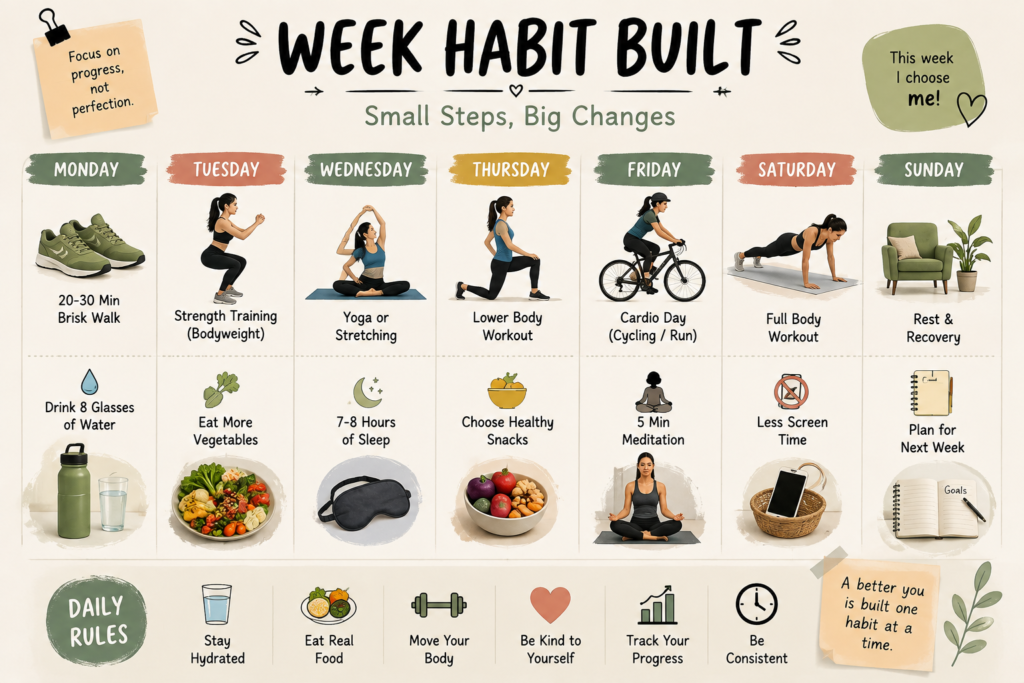
A simple weekly plan can make your fitness journey easier.
Example beginner schedule
Monday: 20–30 minute walk + light stretching
Tuesday: Beginner strength workout
Wednesday: Easy walk or active recovery
Thursday: Beginner strength workout
Friday: 20–30 minute walk
Saturday: Fun activity such as cycling, dancing, swimming, or a longer walk
Sunday: Rest or gentle mobility
You can change this schedule according to your work, studies, family responsibilities, and fitness level.
The goal is not to follow a perfect schedule. The goal is to create a routine that you can repeat.
Step 9: Focus on Nutrition
Exercise is only one part of a healthy lifestyle.
Your food choices also matter.
You do not need to completely remove carbohydrates, fats, or your favorite foods.
Instead, aim for balanced meals.
Include a variety of foods such as:
- Vegetables
- Fruits
- Whole grains
- Beans and lentils
- Eggs
- Fish or lean meat
- Dairy or suitable alternatives
- Nuts and seeds
- Healthy sources of fats
Try to build meals that provide a combination of protein, carbohydrates, healthy fats, vitamins, minerals, and fiber.
If your goal is weight loss, avoid extreme diets that promise very fast results.
A sustainable approach is usually easier to maintain than a very restrictive plan.
Step 10: Drink Enough Water
Hydration is another simple habit that can support your fitness routine.
Keep water available during the day, especially when you are active or exercising in hot conditions.
Your hydration needs can vary depending on factors such as activity, weather, diet, and individual circumstances.
Instead of focusing only on a fixed number of glasses, pay attention to your body’s needs and your activity level.
Step 11: Give Your Body Time to Recover
Beginners sometimes believe that more exercise always means better results.
That is not true.
Your body needs time to recover.
Rest days can help you return to exercise feeling more prepared.
Recovery can include:
- Getting enough sleep
- Taking rest days
- Eating balanced meals
- Staying hydrated
- Doing light movement
- Avoiding unnecessary increases in training
If you are constantly exhausted or your performance is getting worse, your routine may need adjustment.
Step 12: Prioritize Sleep
Sleep is an important part of overall health and recovery.
Adults generally need at least seven hours of sleep per night, although individual needs can vary.
Try to maintain a consistent sleep routine.
Simple sleep habits:
- Go to bed around the same time.
- Wake up around the same time.
- Create a relaxing bedtime routine.
- Keep your sleeping environment comfortable.
- Avoid unnecessary screen use close to bedtime.
- Give yourself enough time to sleep.
A good fitness plan should support your overall lifestyle, not leave you constantly tired.
Step 13: Learn the Difference Between Effort and Pain
Exercise can feel challenging, especially when you are new to it.
You may notice:
- Faster breathing
- Muscle fatigue
- Sweating
- A feeling of effort
These can happen during normal exercise.
However, sharp or severe pain is different.
Do not try to “push through” serious pain.
Stop the activity and seek appropriate medical or professional advice if you experience concerning symptoms.
If you have a medical condition, are pregnant, have a significant injury, or have concerns about starting exercise, speak with a qualified healthcare professional about appropriate activity for you.
Step 14: Increase Exercise Gradually
One of the safest approaches for beginners is gradual progression.
Do not increase your workout duration, frequency, and intensity dramatically at the same time.
For example, if you currently walk for 15 minutes, you could gradually work toward longer walks as your body adapts.
The same idea applies to strength training.
Start with manageable resistance and focus on good technique before trying heavier weights.
WHO guidance specifically notes that inactive people should begin with small amounts of activity and gradually increase duration, frequency, and intensity over time.
Step 15: Track Your Progress
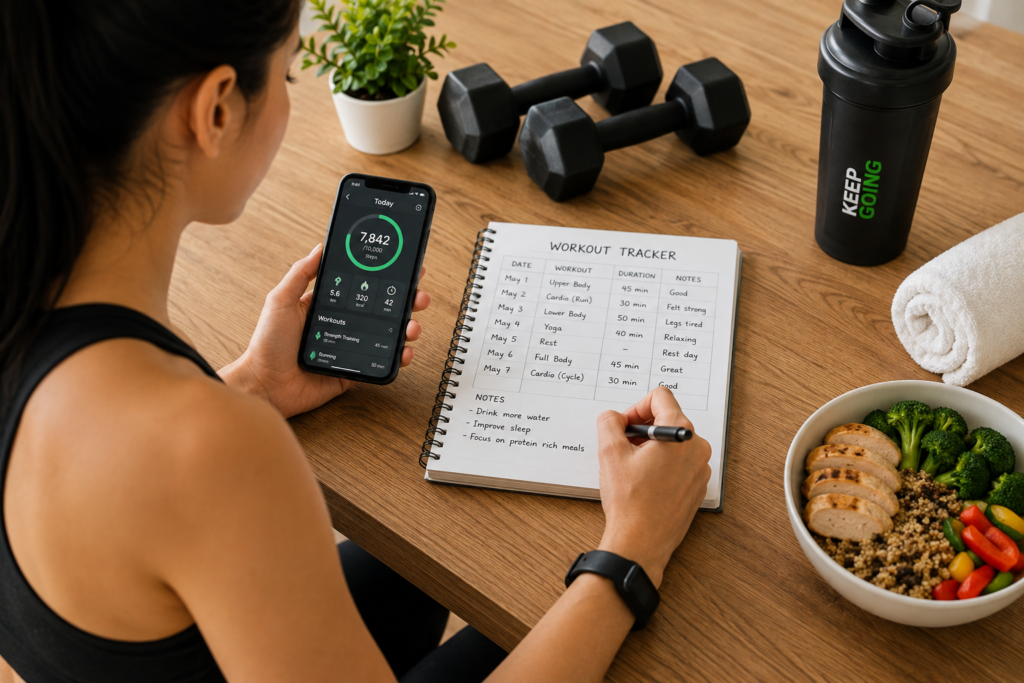
Tracking your progress can help you stay motivated.
You do not need to track only your weight.
Consider tracking:
- Workout days
- Walking time
- Number of repetitions
- Exercise duration
- Energy levels
- Sleep habits
- Flexibility
- Strength
- How your clothes fit
- How you feel during daily activities
For example, if you could only walk for 15 minutes when you started but can now walk for 30 minutes comfortably, that is meaningful progress.
Fitness progress is not always visible in a mirror or on a weighing scale.
Step 16: Stay Consistent Instead of Perfect
Consistency is one of the most important parts of a fitness journey.
You may miss a workout.
You may eat a meal that does not match your plan.
You may have a busy week.
That does not mean your fitness journey has failed.
Simply return to your routine.
Avoid the mindset of:
“I missed one workout, so I will stop.”
Instead think:
“I missed one workout. I will continue tomorrow.”
Small actions repeated over time can become strong habits.
Common Beginner Fitness Mistakes to Avoid
1. Doing Too Much Too Soon
Starting with intense workouts can make your routine difficult to maintain.
Start at a level that feels manageable.
2. Copying Advanced Workouts
A workout that works for an experienced athlete may not be appropriate for a beginner.
Choose exercises based on your current fitness level.
3. Focusing Only on Weight Loss
Fitness is about much more than the number on a scale.
Strength, stamina, mobility, energy, and healthy habits also matter.
4. Ignoring Recovery
Training every day without enough recovery can make your routine harder to maintain.
5. Following Extreme Diets
Very restrictive diets may be difficult to sustain.
Focus on balanced and practical eating habits.
6. Comparing Yourself With Others
Everyone starts at a different point.
Compare your current progress with your previous progress.
7. Expecting Fast Results
Fitness takes time.
Give your body time to adapt.
8. Ignoring Exercise Technique
Good technique is important.
If you are unsure how to perform an exercise, learn the correct movement from a qualified fitness professional.
How to Stay Motivated on Your Fitness Journey
Motivation naturally changes.
Some days you may feel excited to exercise. Other days you may not.
Instead of depending only on motivation, build a routine.
Try these strategies:
- Exercise at the same time each day.
- Prepare your workout clothes in advance.
- Keep workouts simple.
- Choose activities you enjoy.
- Exercise with a friend.
- Listen to music while walking.
- Track your progress.
- Celebrate small improvements.
- Set short-term goals.
- Remind yourself why you started.
You do not need to feel motivated every day.
Sometimes, following the routine even when motivation is low is what builds consistency.
A Simple 30-Day Fitness Journey for Beginners
Here is an easy example that beginners can adapt.
Week 1: Build the Habit
Focus on getting active.
- Walk 15–20 minutes for 4 days.
- Do light stretching.
- Try one beginner strength session.
- Focus on drinking water and sleeping consistently.
Week 2: Add More Movement
- Walk 20–25 minutes for 4–5 days.
- Complete two beginner strength sessions.
- Add gentle mobility work.
- Continue focusing on balanced meals.
Week 3: Improve Your Routine
- Walk 25–30 minutes for several days.
- Complete two strength sessions.
- Add one fun physical activity.
- Continue tracking your progress.
Week 4: Build Consistency
- Aim for regular weekly movement.
- Continue two strength sessions.
- Gradually increase walking duration if comfortable.
- Review your progress.
- Set your next realistic goal.
This is not a strict medical or personalized exercise prescription. It is a general beginner framework that can be adjusted according to your individual fitness level.
What If You Miss a Workout?
Do not worry.
Missing one workout will not destroy your progress.
The important thing is what you do next.
If you miss Monday, continue Tuesday.
If you have a busy week, do what you can.
Even a short walk can be better than doing nothing when you are able to exercise safely. WHO emphasizes that any amount of physical activity is better than none.
Avoid an all-or-nothing mindset.
Your fitness journey should be flexible enough to handle real life.
When Should You Consider a Fitness Professional?
A qualified fitness professional can be helpful if you:
- Do not know how to perform exercises correctly.
- Need help creating a structured workout routine.
- Want accountability.
- Have specific fitness goals.
- Need help improving exercise technique.
- Prefer personalized guidance.
A professional can help you choose exercises according to your current ability and goals.
For people with health conditions, injuries, or special circumstances, appropriate healthcare guidance may also be important before increasing physical activity.
Frequently Asked Questions
How should a beginner start a fitness journey?
Start with simple activities such as walking, mobility exercises, and beginner-level strength training. Begin with a manageable amount and gradually increase your activity.
How many days a week should a beginner exercise?
There is no single schedule that works for everyone. A beginner can start with several days of light-to-moderate activity and gradually build toward recommended activity levels.
For adults, WHO recommends 150–300 minutes of moderate aerobic activity per week, plus muscle-strengthening activities on at least two days per week.
Is walking enough for beginners?
Walking is an excellent starting point. However, a balanced fitness routine can also include strength training and other activities as your fitness improves.
Do I need a gym to get fit?
No. You can begin with walking, bodyweight exercises, home workouts, yoga, cycling, dancing, and other activities.
How long does it take to see fitness results?
Results vary from person to person. Factors such as your starting fitness level, exercise routine, nutrition, sleep, consistency, and individual characteristics can influence progress.
Focus on improving your habits rather than expecting a specific result within a specific number of days.
Should I exercise every day?
You do not need intense workouts every day. Your routine should include appropriate recovery. Light movement, such as walking, can be used on easier days if it feels comfortable.
What is the most important beginner fitness tip?
Start small and stay consistent.
A simple routine that you follow regularly is generally more useful than an intense routine that you stop after a few weeks.
Key Pointers for a Successful Fitness Journey
Before you begin, remember these important points:
- Start slowly.
- Set realistic goals.
- Walk regularly.
- Add strength training.
- Improve your mobility.
- Eat balanced meals.
- Stay hydrated.
- Get enough sleep.
- Take recovery seriously.
- Increase your activity gradually.
- Track progress beyond weight.
- Avoid comparing yourself with others.
- Do not follow extreme diets.
- Learn proper exercise technique.
- Stay consistent, even when motivation changes

Final Thoughts
Starting a fitness journey as a beginner does not have to be complicated.
You do not need an expensive gym membership, advanced equipment, or a perfect diet to begin. Start with what you have and focus on simple actions that you can repeat.
Take a walk. Learn a few basic strength exercises. Eat balanced meals. Drink water. Sleep well. Take rest when needed. Then gradually build your routine.
Remember that fitness is a journey, not a one-day challenge.
Your first goal should not be perfection. Your first goal should be consistency.
As you become more comfortable, you can increase your exercise duration, improve your strength, explore new activities, and set new goals.
Most importantly, listen to your body and choose a fitness routine that supports your health and lifestyle.
Start small. Stay consistent. Keep learning. Keep moving.
Your fitness journey starts with the first step.
Disclaimer
Health information disclaimer: This article is intended for general educational purposes and is not a substitute for individualized medical advice, diagnosis, or treatment. Exercise needs can vary based on age, health status, injuries, medications, pregnancy, fitness level, and other factors. People with medical concerns should speak with an appropriately qualified healthcare professional before starting or significantly increasing exercise.
The physical-activity recommendations in this article are based primarily on World Health Organization guidance, which recommends regular physical activity for health and encourages inactive adults to begin with small amounts and gradually increase activity.